White-Label WordPress Development for US Agencies
A practical partnership guide for US agencies: scope WordPress delivery, agree review checkpoints and choose a remote developer your design and account teams can work with.

In this article
Illustrative workspace. Screens show concepts, not a delivered client system.
Your agency has sold the project, the designer is ready and the client expects a reliable launch. The gap is development capacity. A white-label WordPress partnership gives you an external developer who works within your delivery process while your agency manages the client relationship.
I’m Jagjeet Singh, a WordPress developer based in India. I work on Elementor websites, custom themes and plugins, forms, integrations and ongoing improvements. If your US agency needs help delivering a defined project or handling recurring development work, tell me what is in your pipeline. We can agree the scope, communication and working-hour overlap before starting.
What white-label WordPress development should mean for your agency
White-label describes the working arrangement, not a different kind of website. Your agency can retain strategy, design, account management and approvals while I take responsibility for the agreed development tasks.
Decide whether the developer will attend client calls, communicate only with your team or join selected technical discussions. Also agree confidentiality, portfolio permissions, access, source-code handover and the terms governing the work. A clear agreement protects the relationship better than assumptions about what “behind the scenes” means.
You should be able to explain who owns the next action at any point: design clarification, development, agency review, client approval or launch.
Projects that suit an external WordPress partner
A useful first engagement is a project with an identifiable finish line. Examples include an Elementor build from an approved design, a reusable service-page system, a custom plugin feature or an integration with an existing business tool.
- Design-to-development work: build approved layouts and responsive behaviour in an editing system the client can use.
- Overflow delivery: take a defined set of pages or features when your internal developers are occupied.
- Custom functionality: review a workflow that standard plugins do not cover cleanly.
- Ongoing improvement: agree a queue of fixes and enhancements with priorities and a review process.
For a content-platform move, my Drupal to WordPress migration service can be scoped as a separate workstream.
Start with a brief that prevents avoidable revisions
Send the approved design, page list, content status and required functionality together. A design file alone rarely explains what happens after a form submission, how a content editor creates a new page or which system receives an enquiry.
Identify the decision-maker and distinguish a design correction from a new requirement. Agree whether copy, image selection, third-party subscriptions, deployment and training are included. Record how additional work will be approved.
A small paid pilot can make the partnership easier to assess. Choose one representative page or feature, agree its acceptance criteria and review both the result and the communication before expanding the engagement.
A delivery process your account team can follow
I would propose checkpoints around the parts that carry uncertainty: one representative template, the hardest integration, the complete staging build and the launch review. Each checkpoint should come with a short description of what is ready and what needs an answer.
- Confirm requirements, access and dependencies before implementation.
- Review a representative page before repeating the pattern.
- Test forms, navigation, responsive layouts and agreed integrations on staging.
- Collect consolidated feedback and record the approved changes.
- Launch with an agreed backup and rollback plan, then hand over editing instructions.
Your team should not need to interpret a stream of technical messages to know whether the project is ready for client review.
Working with a US agency from India
I can work around your team’s schedule; we agree the actual hours together. For a project partnership, define the overlap needed for reviews and questions, plus how progress is shared outside those hours. Do not assume every team needs a full day of simultaneous availability.
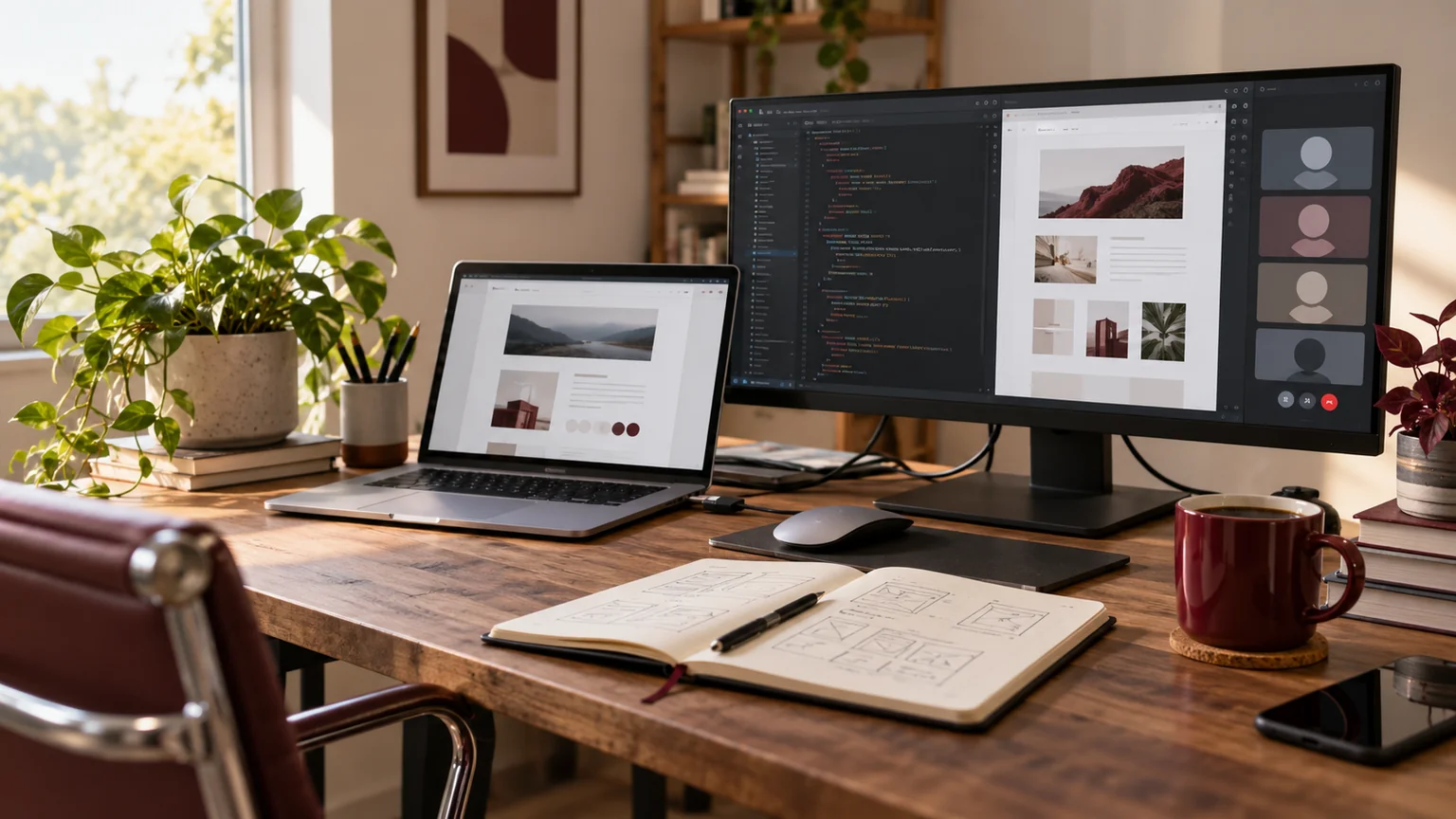
My remote setup includes a MacBook, an external monitor and a 200 Mbps internet connection. The practical agreement still matters: communication channel, turnaround expectations, urgent escalation and planned availability.
If you are hiring for an employment or contract role instead of assigning an agency project, review my remote WordPress developer profile and résumé.
Evaluate the work, then agree a commercial scope
Review relevant websites in my development portfolio and ask about the contribution you need. A finished website is useful evidence, but the editing experience, maintainability and handover also deserve attention.
The quote depends on templates, responsive states, custom functionality, integrations and content readiness. A fixed project scope can work when those are understood. For a changing queue, agree how work is estimated, prioritised and approved. Premium licences, hosting, provider charges and ongoing support should be identified separately.
Ask for acceptance criteria and handover deliverables, not just a launch date. My custom plugin development guide explains how to brief functionality that needs a separate estimate.
Start with one clearly scoped paid project
When you are outsourcing WordPress development to India for the first time, use one contained paid project to evaluate the working relationship. Choose a representative page, defined fix or small feature with the same type of brief your agency normally provides. This gives both sides a useful way to test delivery and communication before expanding the work.
- Share the approved design or affected URL, requirements and supplied content.
- Agree the deliverable, acceptance checks, review rounds and price arrangement.
- Name the agency reviewer and the working-hour overlap needed for decisions.
- Keep access limited to the task and record handover and ownership expectations.
- Review the result and the collaboration before planning a larger engagement.
For a design implementation project, use the Figma-to-WordPress handoff checklist. For a broader hiring decision, the agency contract developer checklist explains how to evaluate the contribution behind the portfolio and the process around the work.
Send a brief for one paid deliverable through the existing agency enquiry button or WhatsApp. We can discuss the requirements and agree a practical first scope without assuming an open-ended engagement.
Questions agencies ask before partnering
Can you build in Elementor so our client can edit the site?
Yes. We can agree native editable containers and widgets, reusable templates and a manageable editing workflow. Custom functionality is reviewed separately so the editor and the business logic remain understandable.
Can you work under our agency’s delivery process?
We can agree responsibilities, communication, confidentiality and handover for the engagement. Client contact and portfolio credit are discussed before work starts.
Do you offer a guaranteed turnaround or unlimited revisions?
Timelines and review rounds are scoped around the actual project. Designs, content, access and approvals affect delivery, so those dependencies belong in the plan.
Bring your next WordPress project
If you have an approved design, a delivery backlog or a feature your team needs help building, send the website or design link, the work required, target launch window and preferred team overlap. Leave passwords and private client records out of the initial enquiry.
I’ll review the brief and discuss a practical first scope. You can start with one project, assess the collaboration and decide whether an ongoing development partnership fits your agency.
Written by
Jagjeet Singh
Full stack development, WordPress engineering and practical web products. I work with businesses, teams and agencies in India and worldwide.
Explore my work