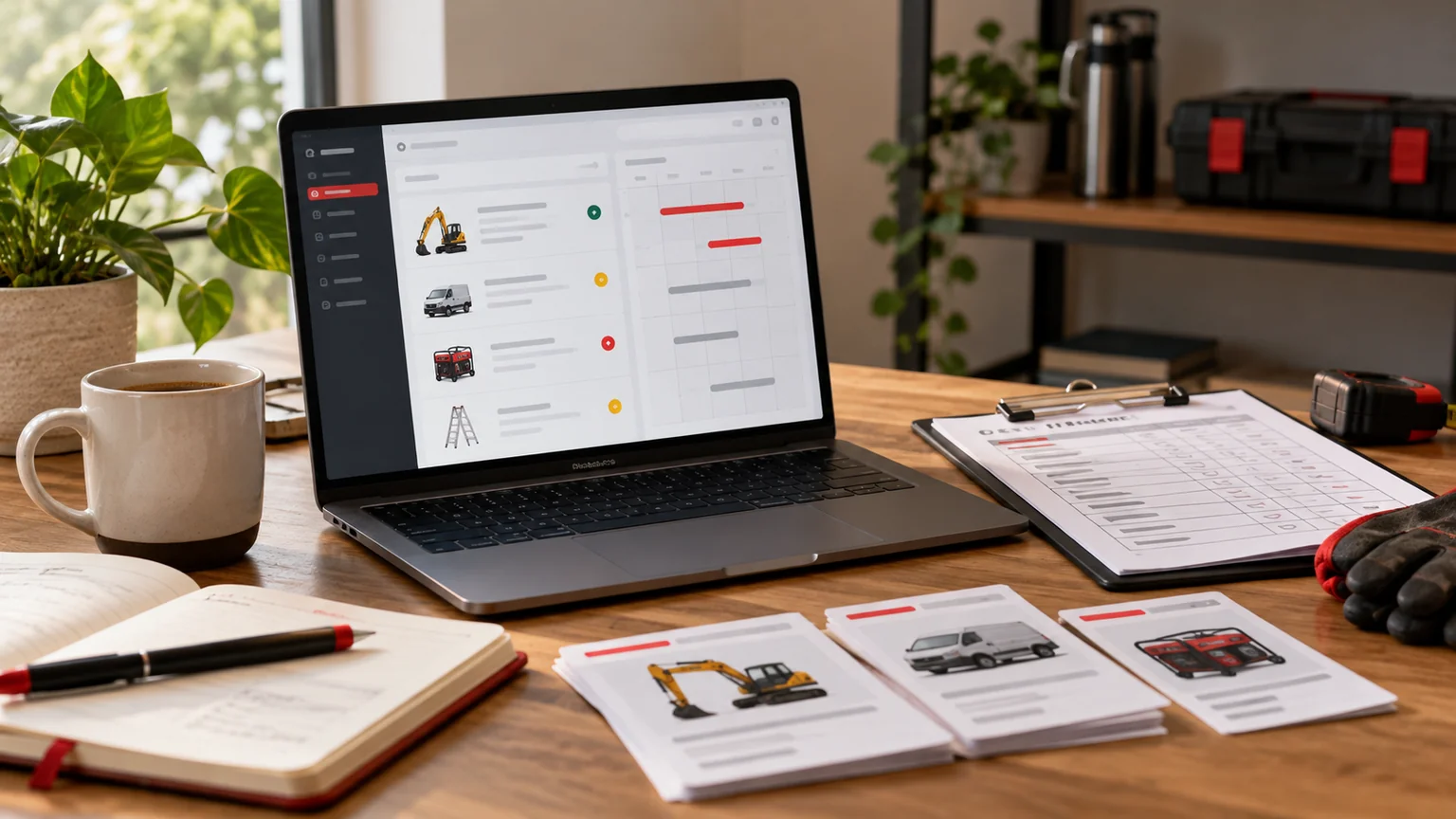
Illustrative workspace. Screens show concepts, not a delivered client system.
A recurring service reminder is only useful when the team knows which equipment it concerns and what work the customer has agreed to. For an Australian trade business, a custom CRM pilot can connect those references before automating reminders. Start with one maintenance workflow where staff currently reconstruct the equipment, agreement and next visit from separate records.
Separate the customer, site and equipment
One customer may have several sites and several items at each site. Keep those relationships explicit so a changed contact does not erase equipment history. The staff member should be able to identify the intended asset without relying on a vague location note.
Use approved references and a review route for missing identification. Similar descriptions should not automatically merge equipment records. A recurring task needs a stable relationship to the item it concerns.
Define the service agreement and recurrence rule
Record the work the business has agreed to assess or perform and the rule that creates the next planning task. A reminder is not the same as a confirmed appointment or a promise that access has been arranged.
The RFC3339 timestamp reference supports explicit offsets for exchanged system events. The maintenance workflow still needs a deliberate distinction between a due date, a local visit time and a system notification. The business supplies the recurrence and scheduling rules.
Keep reminders connected to a responsible action
Choose who reviews a due item, contacts the customer and confirms a visit. If an agreement changes or the equipment is retired, define how future tasks stop or change. An unattended queue of reminders does not establish an operational process.
Use approved message content and contact preferences. A system should not continue sending an outdated service request simply because the original task was created by a schedule.
Record the visit outcome without rewriting the agreement
A visit may be completed, postponed or require further review. Keep that outcome distinct from the ongoing service agreement. The team should understand whether the next task follows the ordinary rule or needs an authorised exception.
If another scheduling, invoicing or asset system is involved, assess the supported handover and identifiers. A first custom CRM release can create a reviewable task while deeper connections are evaluated separately.
Pilot changes to sites and equipment
Use fictional examples for several items at one site, a changed contact, retired equipment and a postponed visit. Ask the office and service team to identify the current requirement from the same records. Check that future tasks follow the approved rule.
- Equipment and site references remain traceable.
- The agreement and visit outcome are distinct.
- Due work has a responsible owner.
- Changes stop inappropriate future reminders.
- Connected tasks preserve the intended asset.
Does this decide required inspection intervals? No. The business supplies its approved technical and operating requirements. The CRM implements the agreed workflow rather than inventing professional service rules.
For the wider implementation decisions, see the custom CRM versus existing software guide.
Discuss a scoped implementation
Describe the equipment structure, service agreements, recurrence rules and current scheduling tools. We can scope a custom pilot around one complete maintenance planning and follow-up journey.
I’m Jagjeet Singh, based in India and working remotely with businesses and agencies. Discuss your recurring service CRM. Share the current site or workflow and the first outcome you want to review; I can assess the requirements and propose an implementation scope.