WordPress Content Approval Workflows for London Agencies: Review Campaign Pages Before Release
A practical development scope for agencies that need a reviewable campaign page and a clear decision before publishing client changes.

In this article
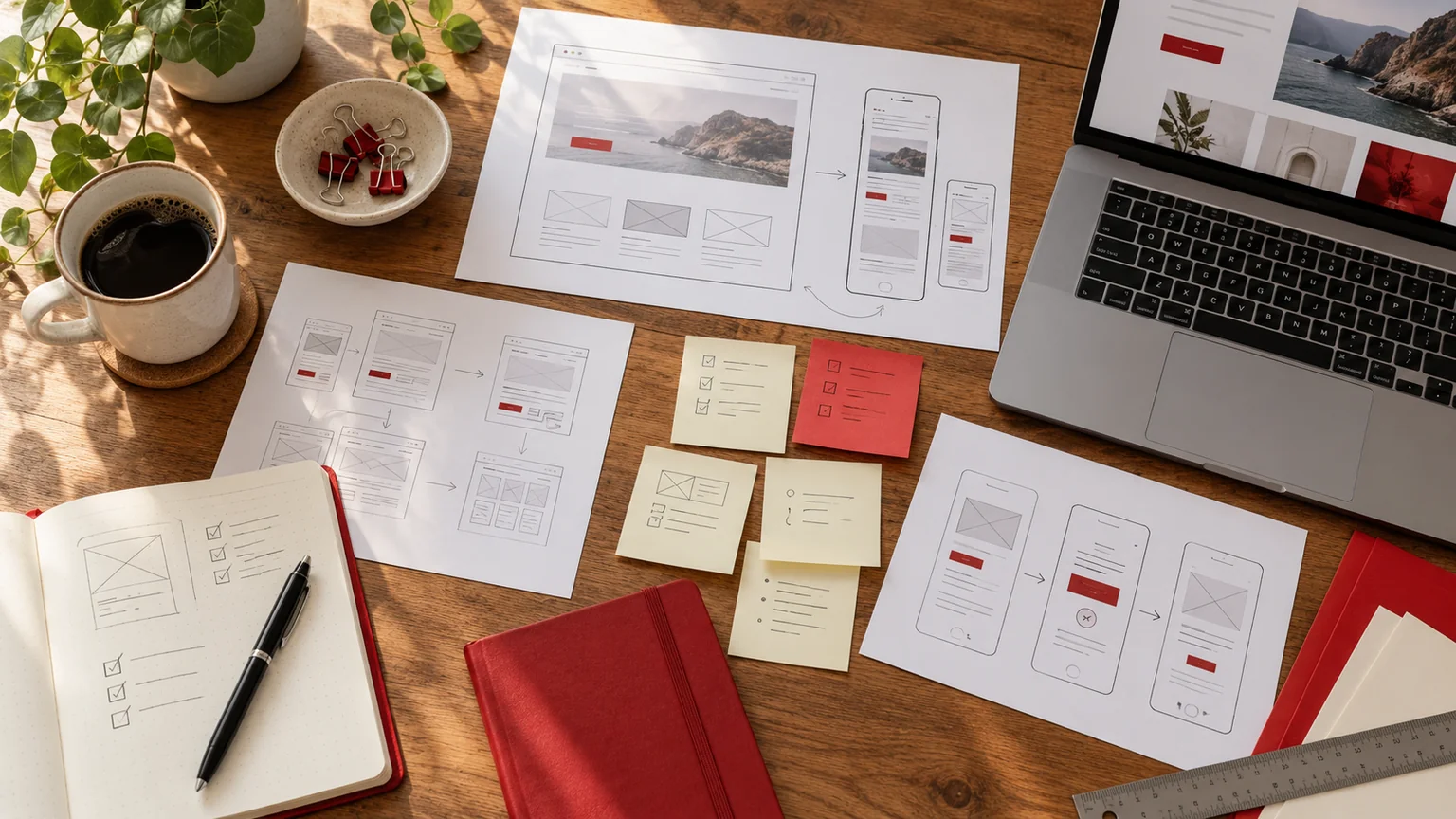
Illustrative workspace. Screens show concepts, not a delivered client system.
A client approves the design in a message, another reviewer changes the copy and the campaign page goes live with an older call to action. The problem is not always the page builder. The agency may lack one agreed version, a named release decision and a way to show exactly what was approved.
For London agencies commissioning WordPress content approval workflows, a useful first scope is one campaign-page journey from draft to publication. I’m an India-based developer providing remote white-label WordPress and Elementor development. I can help implement a review process around the way your agency and clients already work.
Identify the decisions that need approval
Separate copy approval, design approval and release approval. One person may own all three, but the project should say so. A stakeholder agreeing a headline does not necessarily authorise changing a form, tracking configuration or the shared navigation.
Choose a small set of states that make the next action obvious. Draft, ready for review, changes requested and approved for release may be sufficient for one agency. These are proposed workflow labels, not a claim that every state is a built-in WordPress feature.
- Who prepares the page and supplies final assets?
- Who consolidates client feedback?
- Who can approve changes to forms and integrations?
- Who makes the final publication decision?
- What happens when feedback arrives after approval?
Use permissions to support the actual workflow
WordPress provides roles and capabilities for controlling what users can do. Map those permissions to agency responsibilities instead of giving every reviewer administrator access. A client who only needs to review a preview may not need editing access at all.
If an approval plugin or custom functionality is proposed, identify the gap it fills. Custom states, notifications or approval records should be evaluated against the selected tools and builder. Avoid adding several workflow plugins before the simpler review process has been described.
The brief should also explain who can alter shared templates. A campaign reviewer should not accidentally change the global header because the page contains a duplicate navigation block or because their access is broader than the task requires.
Give feedback a stable page version
Agree how the review link is produced, who can access it and when it expires or changes. A password-protected staging site, a suitable preview or another approved review method can each be appropriate. The reviewer needs to know whether the link represents the current version.
Ask reviewers to consolidate comments against a named review round. If edits continue while another person is approving the page, record which version the approval covers. This matters particularly when the call to action, offer text or form destination changes late in the campaign.
WordPress revisions retain a history of saved content changes. They can support comparison, but a saved revision is not itself a client approval record or a complete record of every external configuration. Define the evidence the agency actually needs.
Preserve an editable Elementor page
Build the agreed headline, copy, images and buttons as appropriate native widgets and containers. Define the components the client can safely reuse and the styles they should inherit. A workflow improvement should not make ordinary content changes depend on editing a large HTML block.
Scope page-specific Custom CSS separately from global styles. If a campaign needs an unusual layout, explain which settings remain editable and what needs developer attention. This helps the account manager understand what the client can maintain after handover.
Review longer copy, missing optional images and mobile layouts before approval. The page should remain usable when the final content differs slightly from the design file. That is a more useful acceptance check than a single desktop screenshot with placeholder text.
Define what approval must preserve at release
Create a compact release checklist for the campaign: destination URLs, form fields, confirmation, notification route, tracking and any time-sensitive content. Agree who can authorise a test enquiry and how it will be labelled. Publication should not be considered complete solely because the page is visible.
| Release check | Owner to name |
|---|---|
| Copy and offer | Client or agency content reviewer |
| Layouts and interactions | Implementation reviewer |
| Form and tracking | Approved technical or marketing owner |
| Publication decision | Named release approver |
| Recovery | Person with the required website or hosting access |
For a London team working with me remotely from India, we can agree review overlap and an escalation route around campaign releases. The actual working schedule and availability belong in the project scope, particularly when a release depends on several organisations.
Start with one campaign workflow
Send an example page, your current review method and the point where approval becomes unclear. Identify the builder, any existing workflow tools and who needs to review versus edit. A redacted feedback example can explain the requirement without exposing confidential client plans.
I can review the process and propose the smallest useful implementation: clearer native controls, a supported tool configuration or focused custom development. The Elementor handover guide for London agencies covers related client-editing decisions.
Use the agency enquiry link to describe one campaign you want to make easier to review. We can define a repeatable approval and release path before applying it across every client website.
Written by
Jagjeet Singh
Full stack development, WordPress engineering and practical web products. I work with businesses, teams and agencies in India and worldwide.
Explore my work