Custom CRM for Texas Contractors: Track Bid Invitations, Addenda and Follow-Up
A development guide for contractors who need to connect invitation decisions, revised documents and the estimator’s next action.

In this article
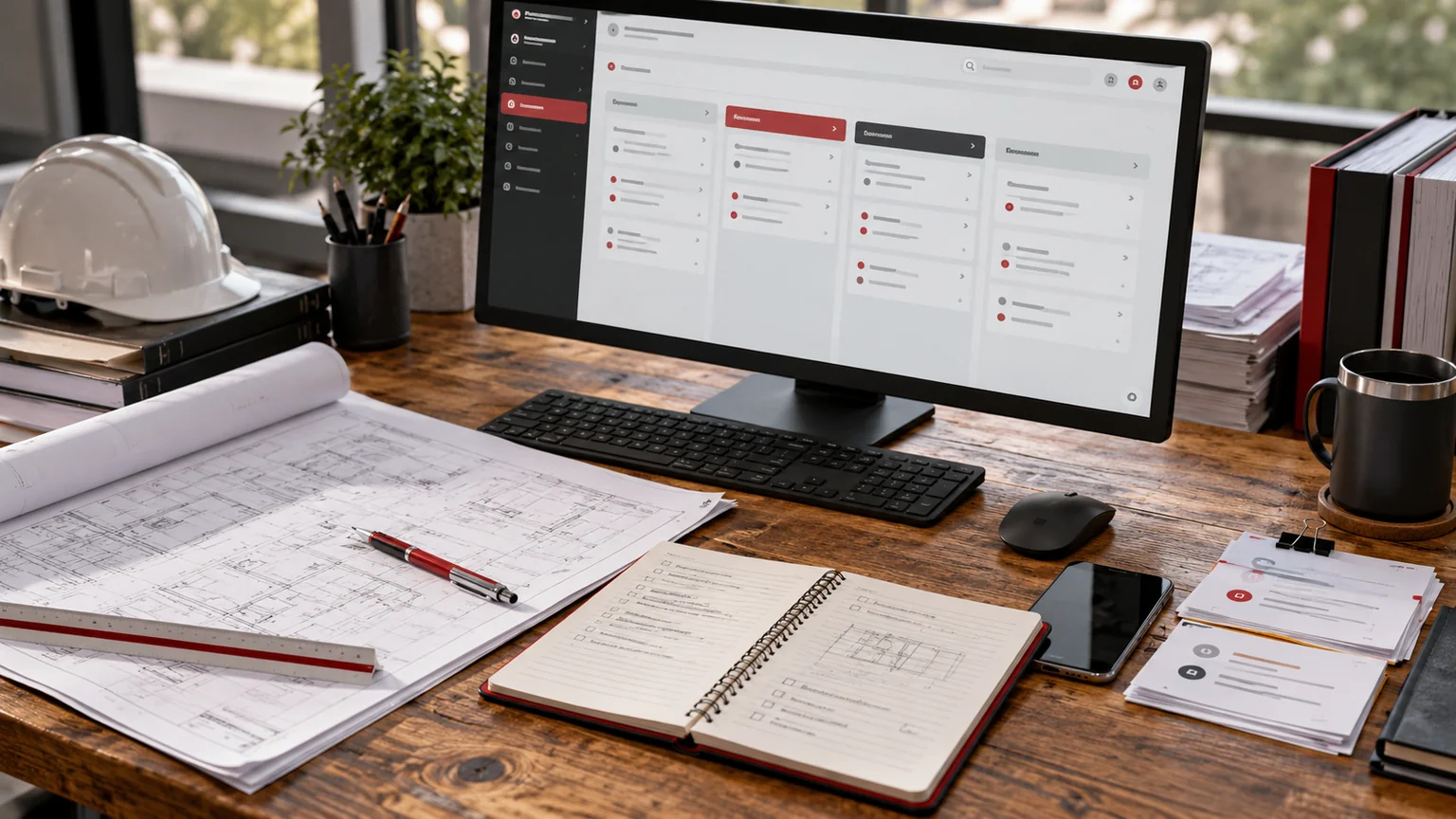
Illustrative workspace. Screens show concepts, not a delivered client system.
A bid invitation arriving in an inbox is only the start of a contractor’s review. The estimator may need to decide whether to pursue it, identify revised drawings and confirm who will handle the next action. For Texas contractors commissioning custom CRM development, the aim should be a clear internal coordination process. The CRM can help organise that work while the customer’s approved procurement or bid portal remains the authority for a formal submission.
Track the opportunity before assuming it will become a bid
Give each invitation a project reference, source, responsible person and an initial review state. Separate invitations that are being assessed from those the business has approved to pursue. A contact record or shared email folder alone may not show that distinction.
Record the reason for a no-bid decision when the team needs it for future review. Do not force every enquiry into a sales forecast. The first useful dashboard often shows unassigned invitations and upcoming decisions rather than an invented probability of winning.
Keep addenda attached to the correct scope
A revised document should remain linked to the project and the version it affects. Decide who reviews an addendum, how its effect is recorded and whether it changes pricing work or a planned submission. An attachment arriving in a mailbox is not evidence that an estimator has assessed it.
Use the authoritative source and reference supplied by the invitation. Access to drawings and bid documents should follow the project’s approved arrangements. The CRM should not turn restricted files into public media links or redistribute documents merely because a contact has requested them.
Make deadlines precise and reviewable
Store the stated deadline and its timezone or other applicable time context. Explain the difference between an internal review date and the formal submission cutoff. If the source changes the deadline, retain a visible record of the update and its owner.
The RFC3339 timestamp specification describes explicit offsets for exchanged timestamps. The implementation still needs the source’s actual business rule. A reminder in someone’s local calendar should not be treated as definitive evidence that a formal bid has been received.
Separate coordination from formal submission
A custom CRM may organise estimating tasks, clarification questions and follow-up, but it should not claim to replace an approved submission portal without a separately authorised and supported integration. Mark submitted only against the evidence and process the business has defined.
| Item | What staff should be able to establish |
|---|---|
| Invitation | Who owns the pursue or no-bid decision? |
| Addendum | Has its effect been reviewed? |
| Deadline | Which source and time context apply? |
| Submission | Where is the approved receipt or reference? |
A failed connection or missed reminder needs an operational response. Avoid burying these cases inside a generic completed status.
Scope one invitation through to its next decision
Begin with anonymised invitations and their revisions. Ask for a demonstration of reassignment, a changed deadline, a no-bid decision and a submission reference. Then evaluate whether the existing estimating or CRM tools could support the same workflow with configuration.
Will a CRM win more contracts? A clearer process can help staff manage follow-up, but contract awards depend on the actual opportunity and bid. The CRM build-versus-buy guide helps assess when a custom coordination layer is justified and what ongoing support to include.
Discuss your implementation
Share sanitised invitation and addendum examples, the tools your estimators use and the decisions they struggle to track. We can define a custom CRM implementation for your Texas contractor team without claiming finished software or guaranteed contract outcomes.
I’m Jagjeet Singh, an India-based developer working remotely with businesses and agency teams. Discuss your contractor CRM workflow. Share the existing website or workflow and the decisions holding the project back. I can assess the requirements, recommend a suitable implementation approach and propose a defined scope. Working hours and review milestones can be agreed with your team.
Written by
Jagjeet Singh
Full stack development, WordPress engineering and practical web products. I work with businesses, teams and agencies in India and worldwide.
Explore my work