WordPress Relaunches for German B2B Businesses: Put Technical SEO in the Acceptance Brief
A commissioning guide for treating existing search destinations as part of the website rebuild rather than a post-launch repair.

In this article
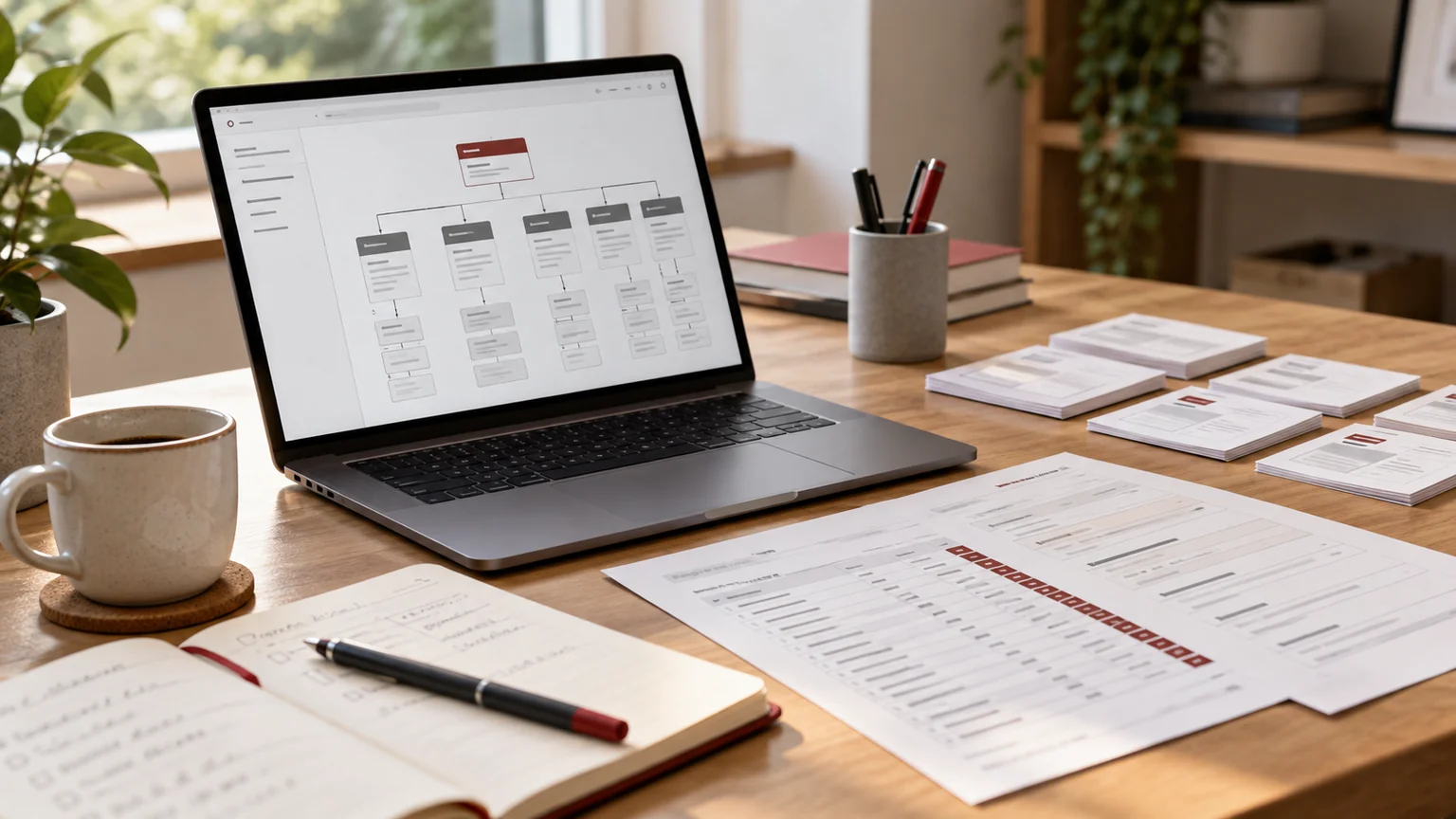
Illustrative workspace. Screens show concepts, not a delivered client system.
A B2B website relaunch can improve design while accidentally removing the pages that prospective customers already find. For a German business commissioning WordPress development, technical SEO belongs in the acceptance brief before the build begins. The project should preserve useful destinations, make intentional changes explicit and keep the enquiry journey working through the transition.
Inventory the pages with a business purpose
List service pages, case studies, resources and category destinations that matter to the business. Use available analytics and search evidence where the owner can provide it. A page’s absence from the main navigation does not mean it has no value.
Record which destinations stay, change or are intentionally retired. The content owner should approve that decision. A designer should not have to infer the future of an important resource from an incomplete sitemap sketch.
Prepare specific address mappings
Google’s site-move guidance covers URL mapping and redirects as part of a move. Apply that to the actual source inventory rather than send every retired page to the homepage.
Choose destinations that serve the original visitor’s purpose. Review product or service context, language and useful related content. Record any intentional withdrawal so an unavailable page is not mistaken for an unnoticed migration error.
Make public indexability a release decision
Development environments often need a different search exposure from the final public site. The release review should verify the intended public robots and canonical signals, response status and sitemap coverage. Do not assume a change of domain or hosting automatically sets those correctly.
Check representative pages after they are publicly served, including a priority service, an old redirected address and a resource download. A correct editor setting does not establish what an anonymous visitor or crawler receives.
Keep content meaning and contact routes intact
A shorter design should not silently remove the explanation that helps a buyer assess a service. Review headings, service details and evidence with the content owner. Keep internal links connected to relevant destinations rather than replace them with generic buttons.
The enquiry route should preserve the service context and readable required contact fields, including a country-code telephone hint. Layout, saved records and authorised delivery tests require distinct acceptance evidence.
Agree post-launch review and practical limits
A useful handover includes the address map, public-page checks and unresolved decisions. The owner can then review search and enquiry evidence after launch. Search engines may take time to process changes; a technical release check is not a guarantee of unchanged rankings.
| Acceptance area | Evidence |
|---|---|
| Old destinations | Useful mapped responses |
| Public pages | Intended canonical and indexability |
| Content | Approved service meaning and headings |
| Enquiries | Correct destination and recorded context |
Can SEO wait until after design? Visual decisions can begin early, but the page inventory and address consequences should be agreed before content is removed or destinations change.
For the wider implementation decisions, see the WordPress redesign planning checklist.
Discuss a scoped implementation
Send the existing website, intended redesign scope and any available priority-page evidence. We can assess a rebuild brief that includes technical search checks and the business enquiry journey.
I’m Jagjeet Singh, based in India and working remotely with businesses and agencies. Discuss your WordPress relaunch. Share the current site or workflow and the first outcome you want to review; I can assess the requirements and propose an implementation scope.
Written by
Jagjeet Singh
Full stack development, WordPress engineering and practical web products. I work with businesses, teams and agencies in India and worldwide.
Explore my work