Manufacturing CRM for German Suppliers: Connect After-Sales Enquiries to Equipment Records
A custom development brief for answering an after-sales enquiry with the right equipment and service context.

In this article
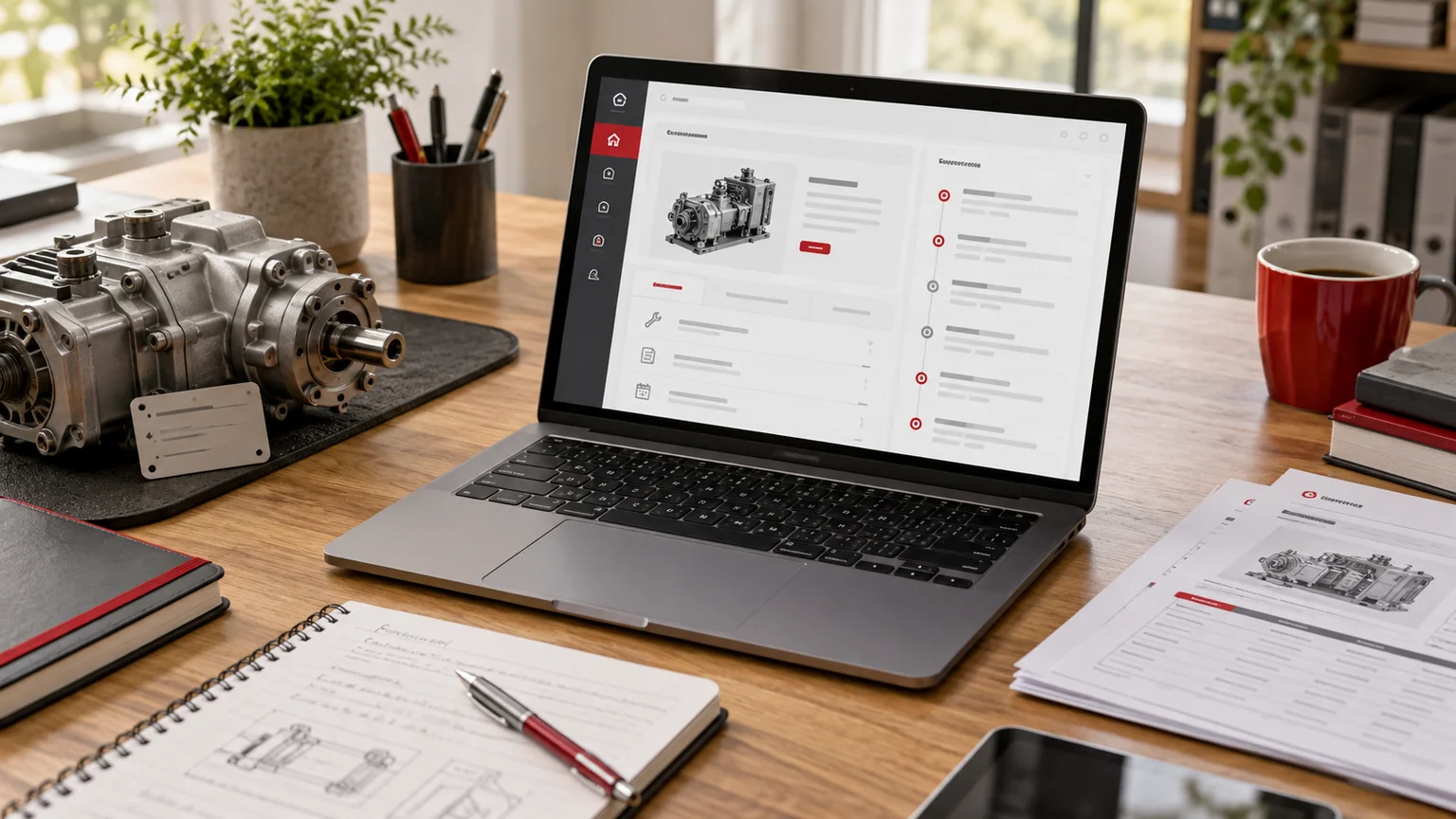
Illustrative workspace. Screens show concepts, not a delivered client system.
An after-sales question is harder to resolve when the support team knows the customer but cannot identify the equipment or previous work. For a German supplier, a custom manufacturing CRM can connect those references and make the next service action clear. The useful first scope starts with one equipment family and the enquiries the business already receives.
Separate the customer from the installed equipment
A customer may operate several units, and one unit may have a history that spans different contacts. Keep the equipment reference independent of the current contact name. The team should be able to identify which unit a question concerns.
Record the approved identifiers the business uses, such as an internal asset or serial reference. Do not infer equipment identity from a similar description alone. Missing identification should lead to clarification rather than an invented match.
Connect service events to the correct reference
A service enquiry, inspection and completed intervention are different records. Link them to the equipment and retain the relevant version of any approved document. A chronological history helps the team understand what is known and what still needs assessment.
WordPress’s attachment schema is one reference for treating documents as identifiable records where WordPress participates. The complete CRM relationship and access model still need custom assessment; a file upload alone is not a service history.
Keep commercial and technical decisions explicit
The business supplies its warranty, service and commercial rules. A CRM can organise evidence and route a review, but it should not automatically promise coverage or decide a technical remedy from a keyword in the enquiry.
Name the person responsible for the assessment and the next action. The staff interface should distinguish a reported symptom, a reviewed finding and work the customer has authorised. This prevents an early note from being mistaken for a confirmed diagnosis.
Plan the operational handover
Decide how an approved service task reaches scheduling, parts or another operational system. Retain the equipment reference, current request and unresolved information. An integration needs a supported operation and a field map, not merely an ERP name in the proposal.
If the first release uses a manual reviewed handover, make that clear. A visible accountable task can be a useful pilot outcome before a deeper connection is justified.
Test equipment and contact changes
Use fictional examples for two similar units, a changed contact, a missing serial reference and a recurring symptom. Ask support and operations to identify what they may act on from the current record. Reconcile duplicates deliberately rather than overwrite useful history.
- The enquiry identifies the intended equipment.
- Previous events remain connected.
- Reported and reviewed information are distinct.
- Commercial decisions have an authorised owner.
- The next operational action is traceable.
Does this replace an equipment-management platform? Not necessarily. A custom CRM may address the customer-facing service workflow while another system remains authoritative for technical operations.
For the wider implementation decisions, see the manufacturing CRM planning guide.
Discuss a scoped implementation
Describe the equipment references, common after-sales questions and current service tools. We can scope a custom pilot around one complete enquiry and reviewed operational handover.
I’m Jagjeet Singh, based in India and working remotely with businesses and agencies. Discuss your equipment service CRM. Share the current site or workflow and the first outcome you want to review; I can assess the requirements and propose an implementation scope.
Written by
Jagjeet Singh
Full stack development, WordPress engineering and practical web products. I work with businesses, teams and agencies in India and worldwide.
Explore my work