Hiring a Bricks Builder Developer: What to Include in Your Website Brief
Hire a Bricks Builder developer with a clear brief for templates, responsive layouts, editing permissions, integrations and handover. Plan the scope first.

In this article
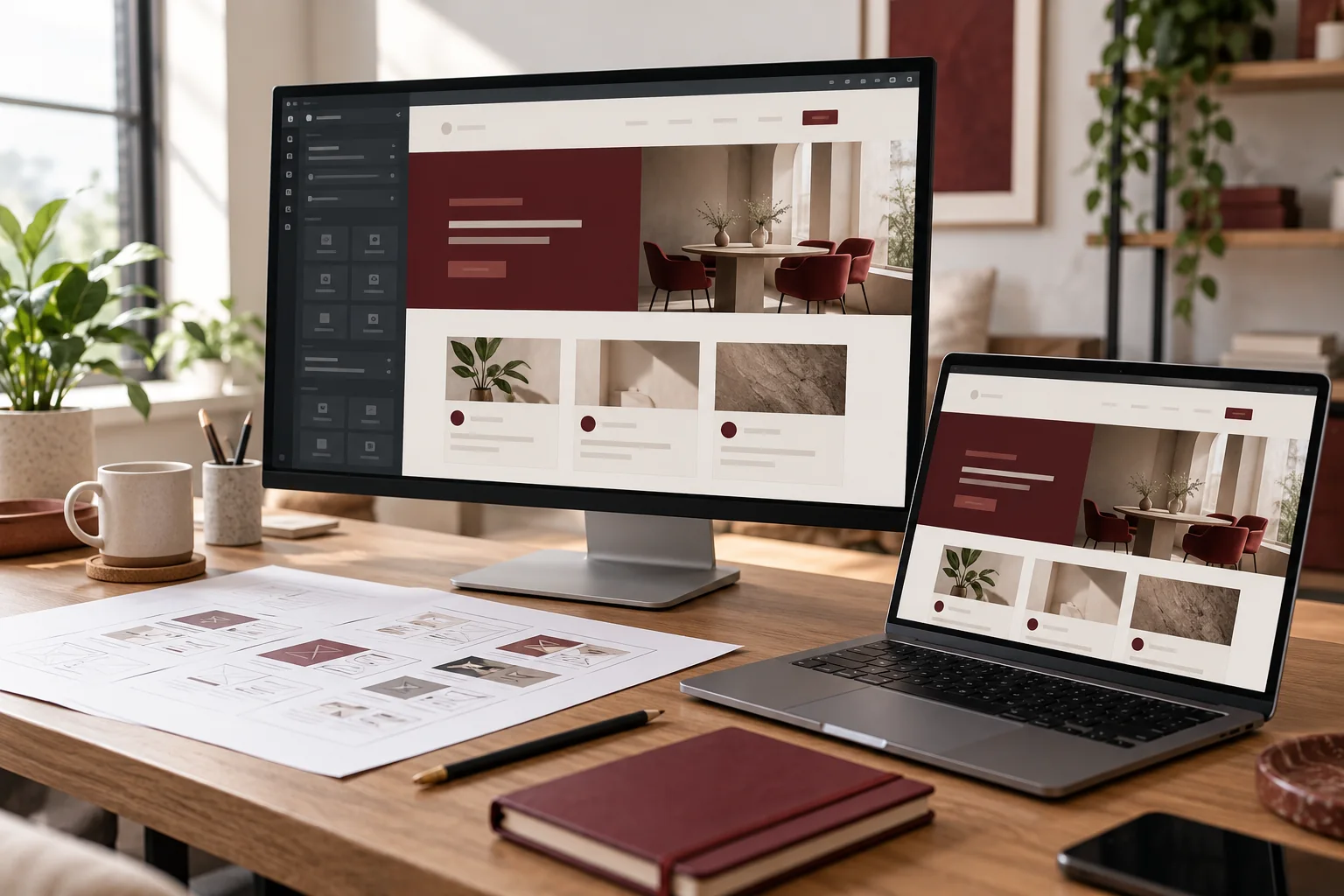
Illustrative editorial image; screens depict concepts, not delivered client work.
Choosing Bricks gives a website project a platform direction. It does not yet define the templates, content structure, integrations or editing experience your business needs. A better brief helps you compare proposals and gives the eventual developer something concrete to build and hand over.
If you are hiring a Bricks Builder developer, start with the business and editorial work the site must support. I offer Bricks Builder WordPress development for scoped website projects. This guide sets out the questions to answer before agreeing a new build, a rebuild or agency implementation support.
Explain what the website needs to help people do
Describe the audience, the offer and the useful actions a visitor should be able to complete. Supply the required page list, existing site and any approved designs. For an agency project, name the person who signs off the visual work and the person who accepts the implementation. They may have different responsibilities.
State what is already decided and what you need the developer to assess. A Figma file may define a visual direction while leaving mobile behaviour, forms and content variations unresolved. Those decisions still need an owner. A brief that separates supplied design from design work requested helps prevent an implementation quote from being mistaken for a complete content-and-design engagement.
Count templates and content variations, not only pages
Ten pages using one service layout can be a different project from ten pages with different content rules. Identify repeated page types such as services, projects, resources, team profiles and news. For each, explain the content fields, relationships and layouts required. Include empty states and unusually long titles where they affect the design.
Ask how new content will be added after launch and which parts should be reusable. If project records need categories or a filter, include the expected behaviour and example content. Do not assume that a visual card in a design automatically defines the data structure, search logic or editorial workflow behind it. The quote should connect those requirements to specific deliverables.
Specify what the client can edit safely
List the tasks your editors perform: replacing images, changing service copy, adding projects, updating contact details or publishing a new article. Then ask the developer to demonstrate those tasks using the intended editor account. Administrative access is not a substitute for a usable handover.
The current Bricks documentation describes full access, content editing and no-access options, alongside custom capabilities. The brief should define the intended permissions and ask for a demonstration on the version being delivered. Record any exceptions. Avoid assuming that every user needs access to layout, styling and all reusable templates simply to change a paragraph.
Turn design quality into review criteria
Agree the responsive layouts and representative screen sizes the team will review. Include readable typography, image treatment, navigation, forms and any long content that may wrap unexpectedly. Keyboard access and visible focus should be included when assessing interactive controls, rather than being left until the end as optional visual polish.
If the project includes motion, define its purpose, reduced-motion behaviour and how it behaves on touch devices. Performance should also have an agreed checking method and representative pages. The choice of builder alone does not establish a load-time result. Images, hosting, integrations and implementation decisions still need to be reviewed against the actual website and its content.
Name forms, integrations and operational owners
Describe every enquiry or account workflow, the fields needed and where the resulting information should go. For an international service enquiry, include a required mobile field with a country-code hint. Name the email recipient or CRM owner who can confirm the journey after implementation.
For each integration, identify the existing system, account owner, required data and whether an API assessment is part of the engagement. Do not assume that an unspecified “CRM connection” includes every business rule. Agree how any test records, emails or other external actions will be authorised. The launch report should distinguish between inspected settings and a successful end-to-end test.
Clarify licences, migration and release responsibility
Ask who owns hosting, domain access and the required software licences, and who handles renewals. If the work replaces an existing site, supply the current URL inventory and explain which content and connections must be retained. Include redirect mapping, metadata preservation and review responsibilities where relevant to the rebuild.
A migration from another builder should be assessed as a rebuild scope unless the developer has demonstrated a reliable way to preserve the required result. Do not accept an unexplained promise that every layout and integration will transfer automatically. Agree staging, backup responsibility, release approval and the way content changes are handled between review and launch. These are part of delivering a usable website, not merely administrative details.
Compare proposals and request a specific next step
A comparable proposal should identify templates, content work, integrations, review rounds, launch tasks and handover. Ask which relevant examples the developer can explain and which tools were used in those examples. A WordPress project should not be labelled a Bricks build unless that is accurate. Review the decisions and maintainability as well as the screenshot.
To discuss a project, send your site or design link, page types, editing requirements, integrations and target date. Agencies can also share the implementation scope and client-review process. You can review my WordPress and web development portfolio and request a Bricks development assessment. I will outline the proposed work, access, availability and pricing before implementation begins.
Related planning: Custom WordPress Plugin Development: When Your Business Needs More Than Existing Plugins · WordPress Website Redesign Checklist: A Plan for More Enquiries · Figma to WordPress Development for Agencies: An Elementor Handoff Checklist.
Official references, reviewed 24 October 2026: Bricks: builder access and capabilities.
Written by
Jagjeet Singh
Full stack development, WordPress engineering and practical web products. I work with businesses, teams and agencies in India and worldwide.
Explore my work