WordPress Malware Keeps Coming Back? What a Proper Recovery Plan Should Cover
Recurring WordPress malware needs more than another scan. Learn how to scope cleanup, access review, entry-point repair and a documented recovery handover.

In this article
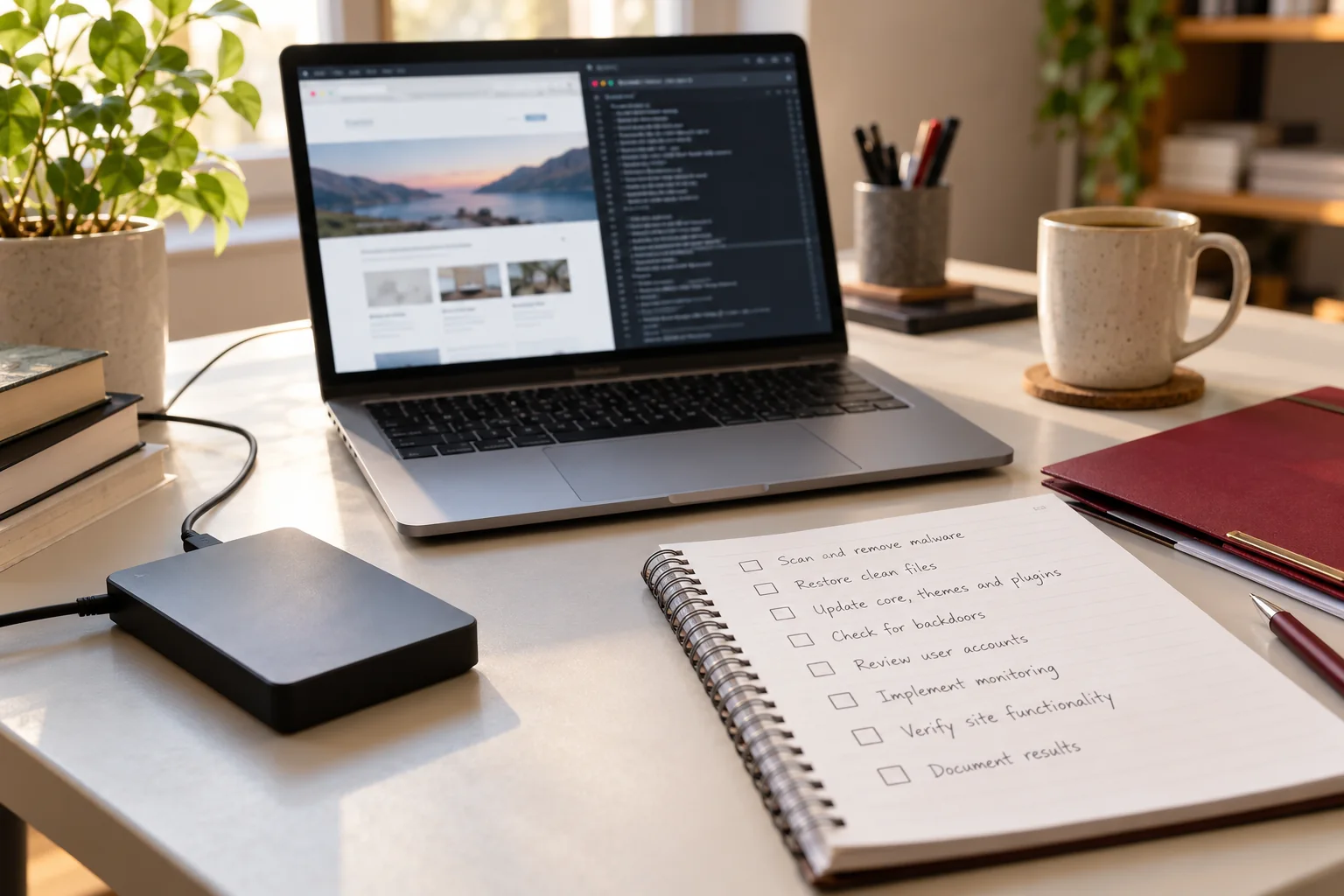
Illustrative editorial image; screens depict concepts, not delivered client work.
The redirect has returned. Another scanner reports an unexpected file. Your host has reopened the same warning ticket. When WordPress malware keeps coming back, the next purchase should be a clearer investigation and recovery scope, rather than another unexplained promise to delete whatever a scanner finds.
This guide is for business owners and agencies deciding how to commission that work. I provide WordPress malware removal and website recovery remotely from India. The first step is to understand the repeated symptom, the previous changes and the environments involved before agreeing access, deliverables and pricing.
Start with the history of the returning symptom
Give the developer a short timeline: when the problem first appeared, what visitors experienced, who carried out earlier work and what changed afterwards. Include the date the symptom returned and the hosting ticket or alert that reported it. An apparently repeated incident can involve the same issue, a different compromise or a warning that has not yet been reviewed.
Keep previous cleanup reports and available logs. They help the next person avoid repeating an investigation without knowing what has already been tried. Do not deliberately visit suspicious pages or bypass a browser warning to collect evidence; describe the warning and let the agreed investigation determine how to examine it safely.
Ask what the investigation includes
A useful quotation identifies the WordPress installation, database, hosting account and related sites included in the review. Ask how the developer will assess unexpected changes and how the host will help when the evidence points beyond the application. A standard website cleanup should not quietly become an unlimited investigation of every server and account your organisation owns.
The WordPress hardening handbook treats security as ongoing risk reduction. It discusses application and hosting responsibilities, trusted components, access, backups and monitoring. Use that wider view when assessing a proposed recovery: removing a visible symptom and reducing the opportunity for its return are separate deliverables.
Make the suspected entry point a named work item
Ask the provider to record what is known about the cause and what remains uncertain. If a component is suspected, the proposal should explain whether it will be updated, replaced, removed or investigated further. If the relevant change belongs to the hosting company, name the support contact and the evidence needed from them.
There may not be enough reliable evidence to prove the original entry point. A candid report should say so. What you can still commission is a review of the agreed access paths and dependencies, followed by specific repairs. Avoid accepting a decorative “secure” badge as a substitute for the list of work performed and limitations found.
Do not restore a backup without deciding what happens to new data
Ask which recovery point is available, why it is suitable and what business records were created after it. Enquiries, uploaded documents, content edits and integration activity may need separate handling. A restore decision belongs with the website owner and the person who understands those records, rather than being an automatic first action.
The brief should also state who authorises credential changes and how required access is arranged. Keep passwords and customer records out of an initial enquiry. Use the agreed access process after the scope is accepted, and identify the owner who can complete account changes. If a wider incident is suspected, the host or an appropriate specialist may need to lead that part of the response.
Agree what counts as a recovered business website
Write down the journeys you need checked. For a service business, that might mean the main service pages, a document download, administration and the route an enquiry follows to the team. An agency may also need confirmation that content editors can still maintain the approved layouts.
Decide which checks can create records or send notifications. Those actions need explicit permission, named test data and someone who can confirm the result. A report should distinguish a configuration inspection from a completed delivery test. Checking that the homepage opens cannot establish that every business function, file or account has been reviewed.
Compare cleanup quotes by their deliverables
Ask each provider for the same completion record:
- The environments and symptoms investigated.
- The files, components or access paths repaired within scope.
- Any hosting actions and the party responsible for them.
- The business journeys checked and the limits of those checks.
- The agreed observation period, open findings and next owner.
Compare the proposed work and availability before comparing the headline price. Follow-up support should have a defined scope: what it covers, how a returning symptom is reported and what requires a new assessment. No responsible proposal should promise that a website can never be compromised again.
Commission recovery first, then agree ongoing care
Once the immediate work is understood, discuss whether ongoing WordPress maintenance is appropriate. Recurring updates and agreed checks are useful only when ownership is clear. They do not replace an unresolved investigation. A separate WordPress and PHP security update review may also be relevant when the host has issued a runtime notice.
To request a scoped recovery assessment, share the website URL, host, symptom timeline and any earlier cleanup summary. Tell me which business functions are affected and who can approve changes. I will review that information and propose the next step, including any hosting or specialist involvement needed, before implementation begins.
Related planning: Google Shows a Security Warning on Your WordPress Website: Cleanup and Review Explained · WordPress Malware Removal: What to Do When Your Website Is Hacked · WordPress Malware Removal for UK Businesses: What a Cleanup Quote Should Include.
Official references, reviewed 24 October 2026: WordPress security and hardening guidance.
Written by
Jagjeet Singh
Full stack development, WordPress engineering and practical web products. I work with businesses, teams and agencies in India and worldwide.
Explore my work