WordPress Client Portals for UK Businesses: A Commissioning Brief
A commissioning brief for UK businesses deciding what their first WordPress client portal should do, how to review it and who will operate it.

In this article
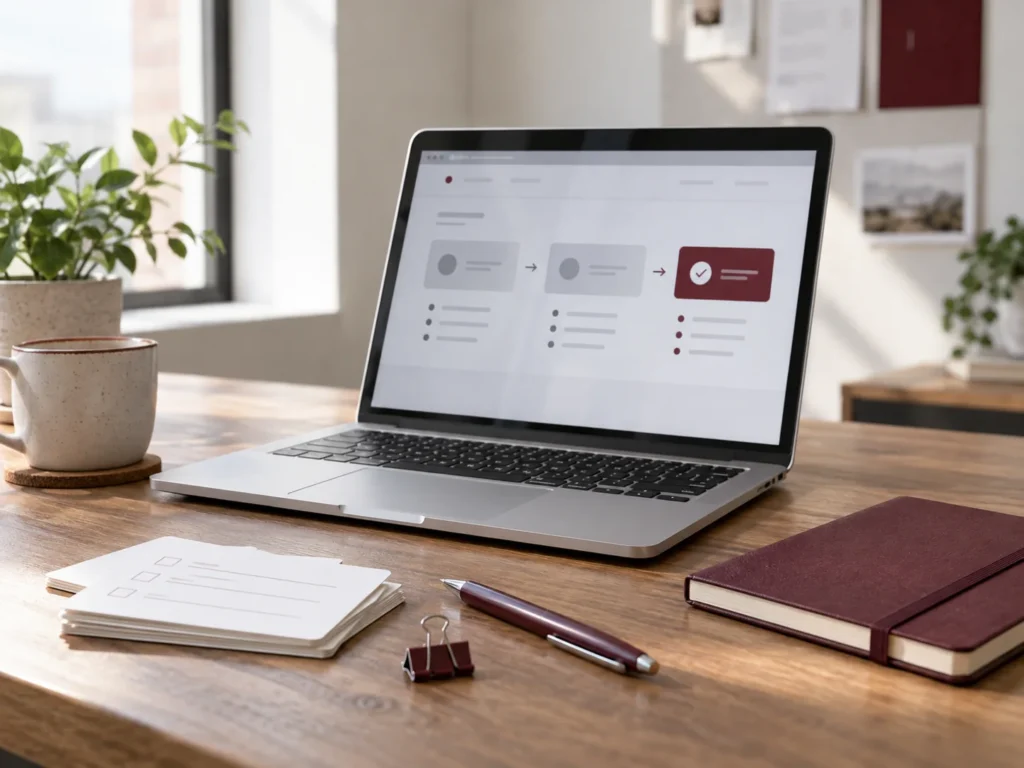
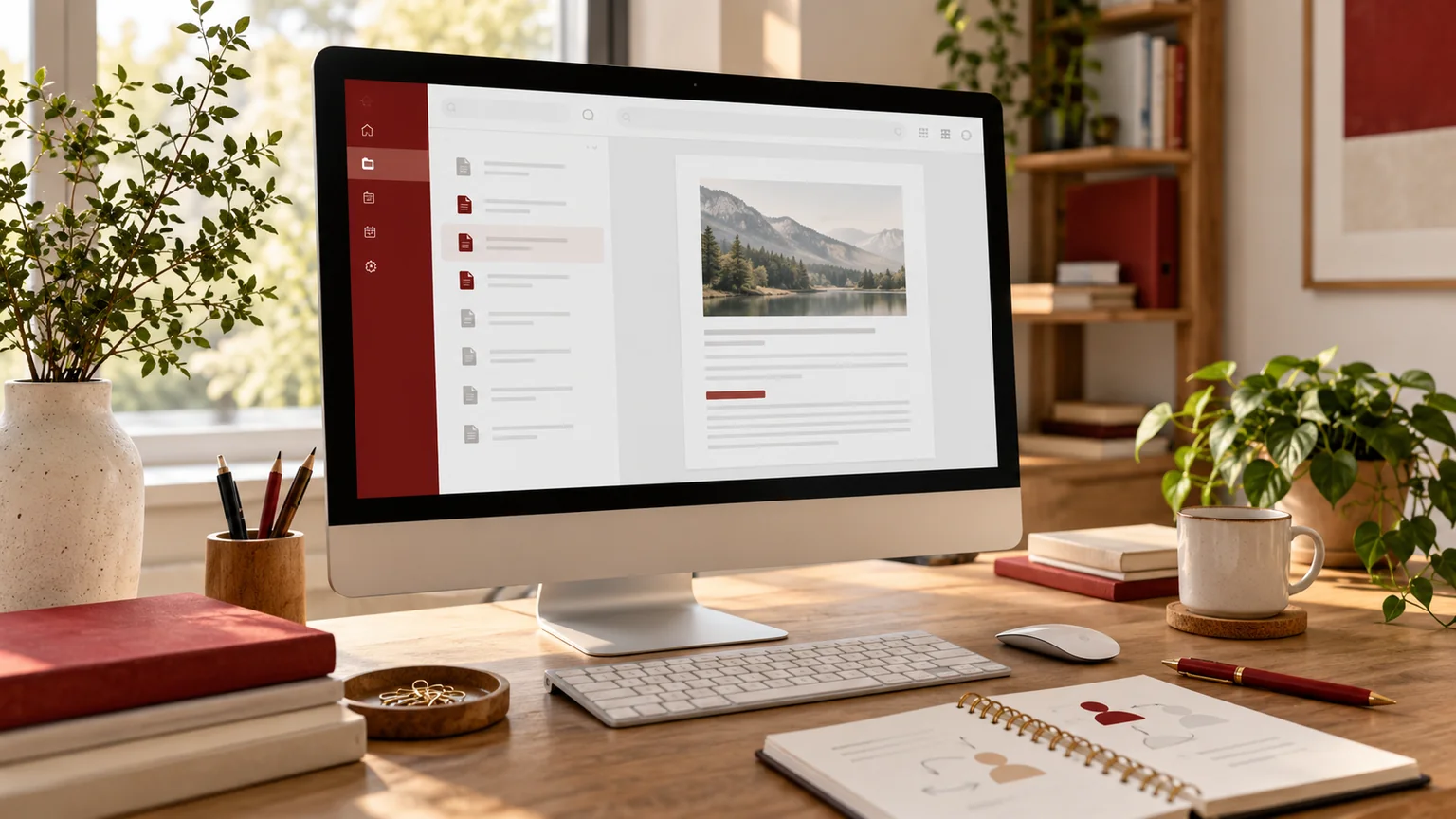
Illustrative workspace. Screens show concepts, not a delivered client system.
Before commissioning a WordPress client portal, agree one customer task the first release must complete. A useful brief connects the customer, the record, the staff response and the evidence needed to accept the work. It also says what the release will leave for later.
My custom WordPress plugin development service can assess a supported plugin configuration, a focused extension or custom implementation against that brief. I work remotely from India with UK businesses and agency partners. This guide helps commission the work; it does not describe a finished portal product.
Write a first-release workflow statement
Complete this sentence before asking for an estimate: “When [customer role] needs [record or action], they can [permitted task], and [staff owner] handles [next step].” A dashboard is a presentation choice; this statement identifies the actual work.
Fictional scope example: an account contact signs in, retrieves the current approved document for their organisation and reports a missing file to the account team. The first release excludes online payments, customer self-registration and replacing the company CRM. Those exclusions make the example easier to estimate; they are not limitations of every portal.
- Identify who creates the account and confirms its organisation.
- Describe the information the customer needs at that moment.
- Name the staff queue or person receiving an exception.
- Agree how the business knows the task has completed.
Supply the account rules the estimate depends on
Provide a redacted example of an organisation with two contacts, and describe what changes when a contact leaves. State whether one adviser can represent several clients. These relationships affect the scope even if the first screen looks simple.
WordPress’s roles and capabilities documentation explains platform permission concepts. A proposal still needs to identify how this portal will enforce access to its own records and files. Ask which rules a supported plugin covers and which require an extension or custom work.
Keep the business decision separate from its implementation: “a contact can see only their organisation’s released documents” is a requirement. A chosen membership plugin or storage mechanism is a proposed way to satisfy it.
Use a decision sheet instead of an assumed feature list
A short decision sheet makes gaps visible before development starts. Mark an unanswered item as a decision with an owner, rather than silently include it in a fixed-price assumption.
| Brief item | Decision the business supplies | Evidence requested from the proposal |
|---|---|---|
| First customer task | One complete workflow and explicit exclusions | A sample journey and acceptance criteria |
| Account boundary | Who belongs to which organisation | How record and file access will be enforced |
| Document source | Where approved files originate and who releases them | Storage, release and access approach |
| Connected system | The source of truth and whether updates return to it | Supported operations and failure handling |
| Ongoing operation | Who maintains access, content and exceptions | Handover and maintenance scope |
If documents are the central workflow, use the document access and version test guide to turn those requirements into a deeper technical review. The same checks can inform projects outside Germany.
Define the staff action and integration boundary
When a customer reports a missing document, where is the request saved, who owns it and what acknowledgement appears in the portal? A notification alone does not define an operating process. Agree which events need an email, which need a staff task and which only update the account view.
An existing CRM may remain the source of truth. Specify whether the portal only reads a status or can also change it. Include duplicate handling, unavailable data and an unsuccessful update in the estimate assumptions.
The WordPress API integration guide helps prepare that connected-system brief. Replacing the CRM is a separate business decision and scope.
Agree a small acceptance sample before rollout
Request a representative workflow using clearly labelled fictional accounts and documents. The sample should demonstrate the customer task and the staff response, with the account rules agreed above. It gives the buyer a review checkpoint before a larger rollout.
- The intended account contact can complete the agreed task.
- An unrelated account cannot retrieve that record or file.
- A missing document leads to the agreed staff action.
- An unavailable connected system produces an understandable state.
- The business owner can review the result on the relevant devices and with a keyboard.
Record what was demonstrated, what remains untested and who accepts the sample. Any real enquiry or notification test needs its own authorised arrangement.
Compare implementation and operating responsibilities
Ask the proposal to map each essential requirement to supported configuration, an extension or custom development. Name licences, dependencies and any unknown that needs a technical sample. A shorter feature list can still involve substantial work when account relationships or external systems are complex.
Agree who adds users, removes former contacts, releases documents, handles failed requests and applies updates. Separate the initial build from ongoing maintenance and later scope changes. Public Elementor content and restricted portal records may use different editing interfaces; show the intended owner both.
What should an estimate make explicit? Its assumptions, exclusions, review rounds, acceptance evidence and support arrangement. These are useful comparison points between proposals without pretending every portal has the same price or delivery time.
Send the decisions needed for a portal assessment
Share the current site, first workflow statement, account relationships, document source and staff owner. Include known integrations and the decisions still awaiting an owner. Use anonymised examples and describe sensitive categories at a high level until assessment access is approved.
I can review that brief and scope a WordPress portal implementation or technical sample for your UK business. Discuss your client portal project to agree the first reviewable workflow and its operating responsibilities.
Written by
Jagjeet Singh
Full stack development, WordPress engineering and practical web products. I work with businesses, teams and agencies in India and worldwide.
Explore my work