
WordPress Multisite Content Migration: Splitting One Site Into Separate Websites
Splitting a WordPress network requires decisions about shared users, files and settings as well as moving page content.

In this article
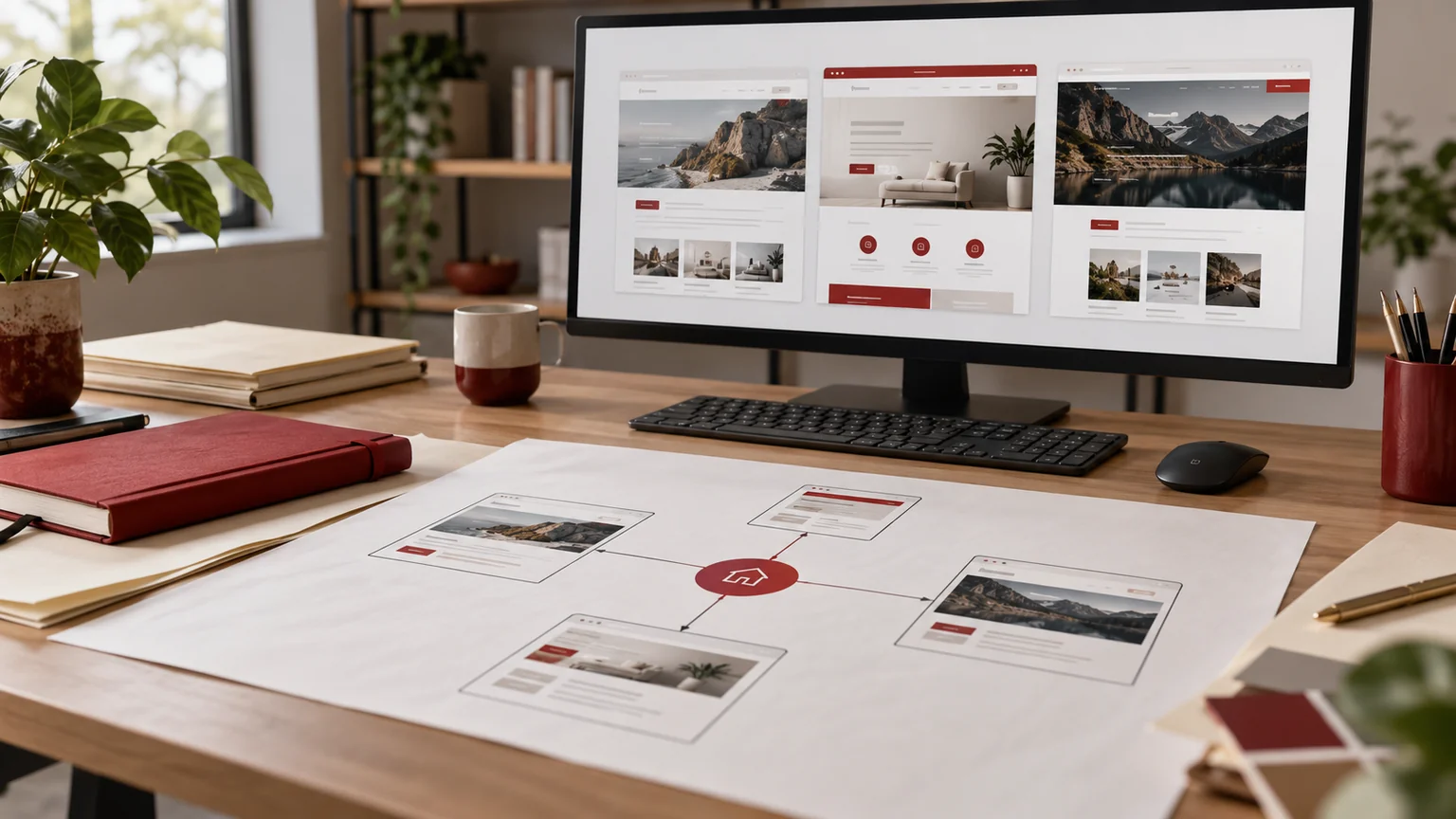
Editorial illustration. Any screens and records are illustrative, not a delivered client system.
A WordPress multisite network can make several websites easier to manage together. When brands, departments or ownership separate, the same shared structure can complicate a move. Exporting one subsite’s pages does not answer who owns the users, uploaded files, plugin settings or services shared by the network.
I would begin a WordPress multisite separation project with a dependency inventory. The aim is to define what belongs to each future website, what remains shared and which responsibilities need a new owner before launch.
Confirm what is actually being separated
Identify the subsites involved and the desired destination for each one. A single extracted subsite is different from dissolving an entire network. Record the present addresses, future domains, languages, publication owners and any deadline tied to an organisational change.
Also ask why the split is happening. Independent hosting, separate administration, a brand sale and different release schedules create different requirements. My guide to multisite versus separate websites can help confirm the architectural decision. The migration scope should follow an agreed destination model rather than assume that every current shared feature must be recreated.
Build a dependency map for each subsite
Use an inventory that names both the asset and its future owner. This hypothetical map shows the decisions to resolve:
| Dependency | Question before extraction | Evidence to collect |
|---|---|---|
| Content | Which records belong to this site? | Content type and count register |
| Media | Are files shared or separately owned? | File references and sample originals |
| Users | Who needs destination access? | Approved user and role mapping |
| Plugins | Is configuration network-controlled? | Settings and dependency list |
| External services | Will accounts remain shared? | Account owner and transition decision |
| URLs | What changes at launch? | Old-to-new address map |
Distinguish content export from a complete migration
The WordPress export command creates a content export. It is not a complete package of every file, configuration setting and dependency needed by an independent site. Treat media binaries, settings and operational connections as separate items to assess.
The WordPress migration handbook also addresses the additional references involved in moving multisite environments. This is why I would test the extraction method on a representative subsite before committing to a bulk process. A successful import count alone does not demonstrate that the destination behaves correctly.
Map users without carrying over unnecessary authority
A shared user may edit several subsites or hold wider network responsibilities. Their destination role should reflect the new website’s needs. Copying a role label without reviewing capabilities can give someone more or less access than intended.
Prepare an approved list of active users, content authors and administrative contacts. Decide whether historical authors need sign-in access or only attribution. Identify any shared login provider or member functionality before moving accounts. The business should resolve disputed ownership and unnecessary accounts; the migration should not guess. Confirm how users will be told about their destination access without distributing sensitive credentials insecurely.
Plan files, links and shared configuration
Review images, documents, downloadable resources and embedded assets. A page may display correctly while still loading its files from the old network. Decide which dependencies can remain temporarily and which must move before the old service is retired.
Record navigation, form destinations, scheduled jobs and plugin configuration. Pay special attention to settings controlled at network level and licences tied to a domain or account. The independent website needs its own operational arrangement where appropriate. Its editors should not discover after launch that they cannot change a form recipient or reconnect a service previously managed by the network administrator.
Agree the publication freeze and final data transfer
Decide when editors stop changing the old subsite and how updates made during the migration are handled. A long build followed by an old export can lose recent articles, form records or other activity. Name the data types that require a final transfer.
My guide to staging-to-live releases and enquiry data covers related ownership questions. In a separation project, each destination also needs a launch contact and a clear decision about the old URL. Redirects, domain changes and content publication should be coordinated instead of treated as unrelated tasks.
Check independence, not just visual similarity
Acceptance should demonstrate that the destination can operate without an accidental dependency on the old network:
- Content counts and representative records reconcile.
- Media opens from the intended destination.
- Approved users have the correct roles.
- Forms and scheduled actions use the right recipients and accounts.
- Important old URLs reach the intended content.
- Search, navigation and document links work.
- Editors can perform their normal publishing tasks.
- Remaining shared dependencies are documented and approved.
Keep a list of exclusions and unresolved records so the owner can distinguish a deliberate decision from a migration defect.
Prepare a scope that can be estimated responsibly
Send the network structure, subsite addresses, destination domains, plugin inventory and representative content. Include network-admin access arrangements, user ownership decisions and any services you plan to retire. State whether design changes are included; combining a separation with a redesign expands the acceptance work.
I can assess that material through my WordPress migration service and propose a pilot extraction, migration map and launch checklist. The useful first deliverable is a dependency-led plan. It gives you a clearer basis for timing and responsibilities than assuming that a content export is the whole project.
Written by
Jagjeet Singh
Full stack development, WordPress engineering and practical web products. I work with businesses, teams and agencies in India and worldwide.
Explore my work

