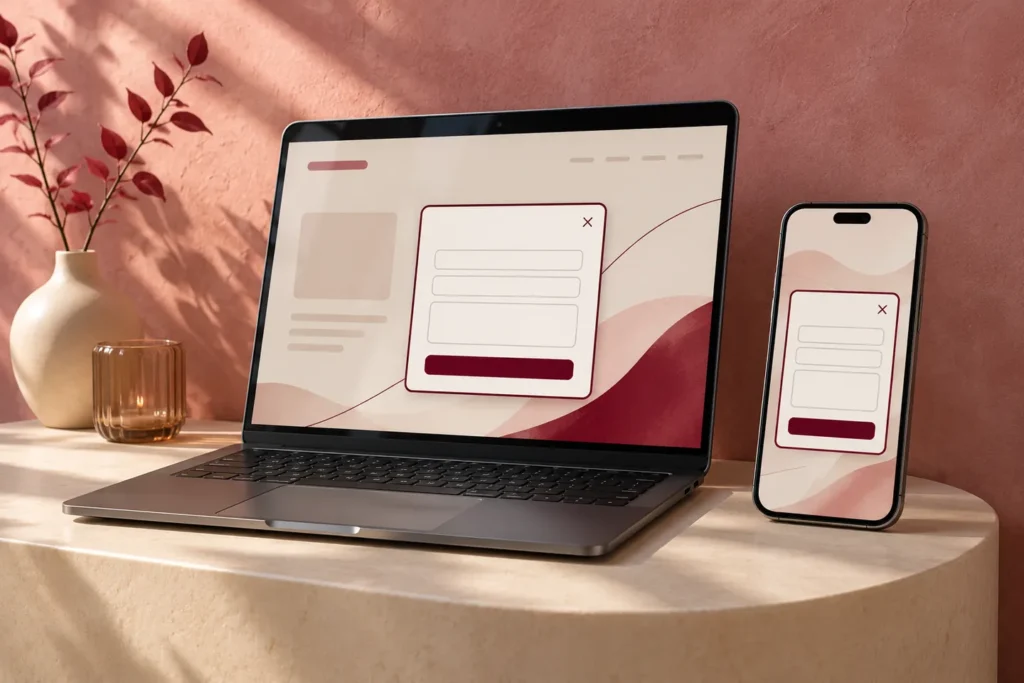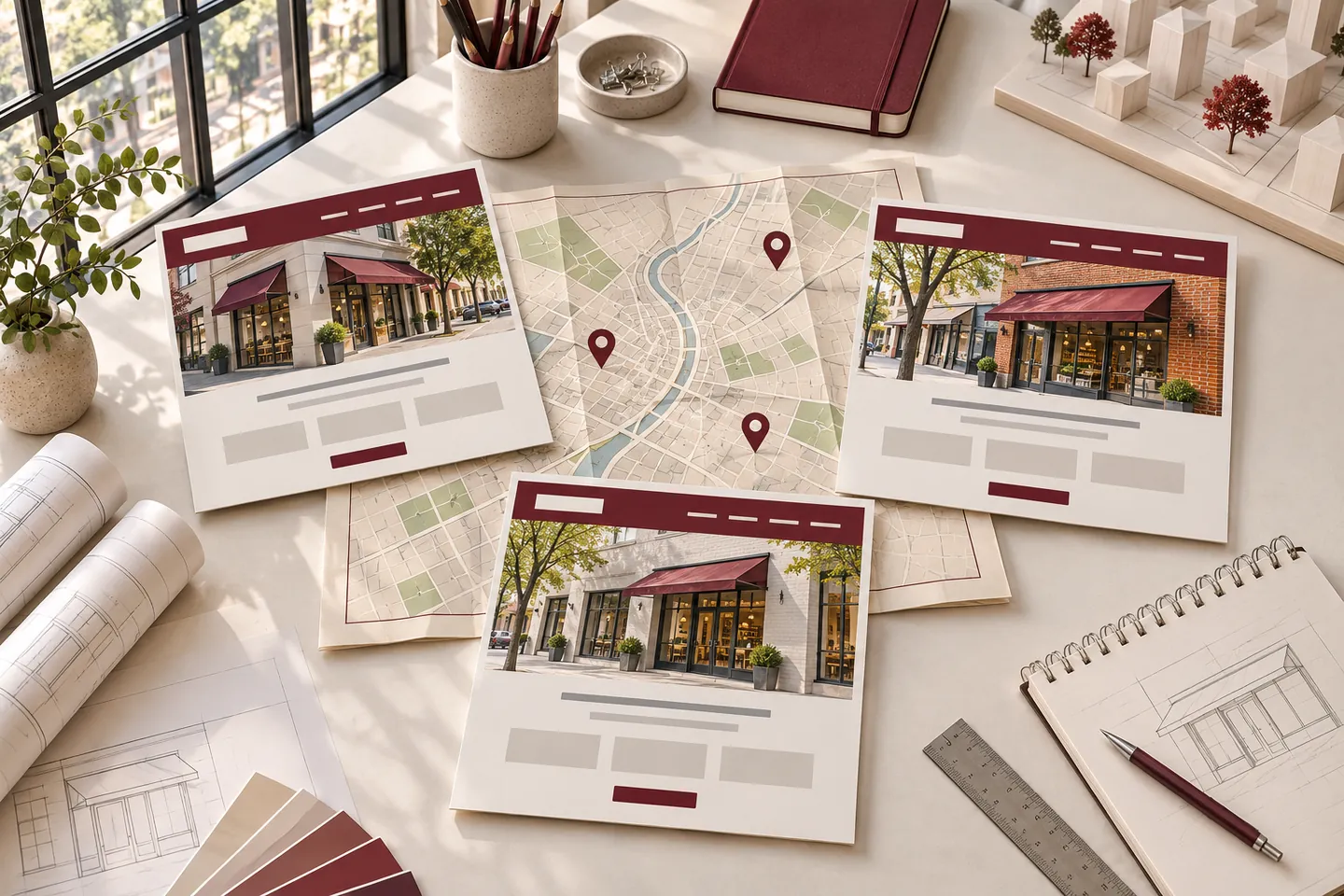
Editorial illustration of a shared website design applied to fictional locations.
An agency can build a branch page quickly. The bigger question is what happens when the client opens twelve more locations, changes holiday hours, or moves its quote requests to a different team. A franchise website works best when the brand can publish new branches from a shared design and each location still has room for accurate local information.
Start with the actual location records
Ask the client for a complete list of open, planned and closed branches. Record the branch name, service area, hours, contact details, approved images, available services and who answers enquiries. Give every branch a stable identifier that survives a change to its public name.
For a handful of branches, individual WordPress pages may be easy to maintain. A repeatable location content type is worth considering when editors need to reuse branch details in a directory, on service pages or across a larger rollout. WordPress can store that content in a custom post type. Its developer guide recommends registering the type in a plugin for portability between themes. WordPress custom post type documentation.
Agree what local editors can change
Build the location template around information customers need. In a fictional chain of repair shops, the head office owns the brand design and service descriptions, while each branch supplies opening hours, photographs and access information. Decide who reviews a change before it appears publicly.
| Content | Owner | What to check |
|---|---|---|
| Services and pricing explanation | Head office | Each branch shows its approved service list. |
| Local hours and images | Branch editor or named reviewer | Holiday hours can change without editing the shared template. |
| Quote destination | Agency and client operations | Each branch routes to a staffed inbox or an assigned CRM queue. |
Route the enquiry with the branch context attached
Decide how a visitor chooses a branch from the directory and what happens if they start on a general service page. Capture the selected location and keep the branch identifier with the enquiry record. Show a reply expectation that the business can meet.
Test a branch with its own inbox, a branch using a regional queue and a closed location. Agree a central fallback when the intended destination is missing. Confirm which team monitors that fallback and how it sees the original branch and landing page.
Estimate the rollout after a small pilot
Scope the site structure, location template, editor handover and routing rules as separate deliverables. Start with one directory and two branches with different operating details. Have a client editor add a third branch during review and check that the directory, location links and enquiry routing behave as expected.
For a rebuild, include a mapping from existing branch URLs to the new pages. Quote content collection, photography and location imports separately when they need different owners. The white-label WordPress estimate guide covers the other inputs that help turn a pilot into a fixed scope.
Send a branch list and one example page
Share the number of locations, two representative branches, the design direction and the current enquiry destinations. I can scope a white-label WordPress pilot your agency can review with its client before commissioning the full rollout.