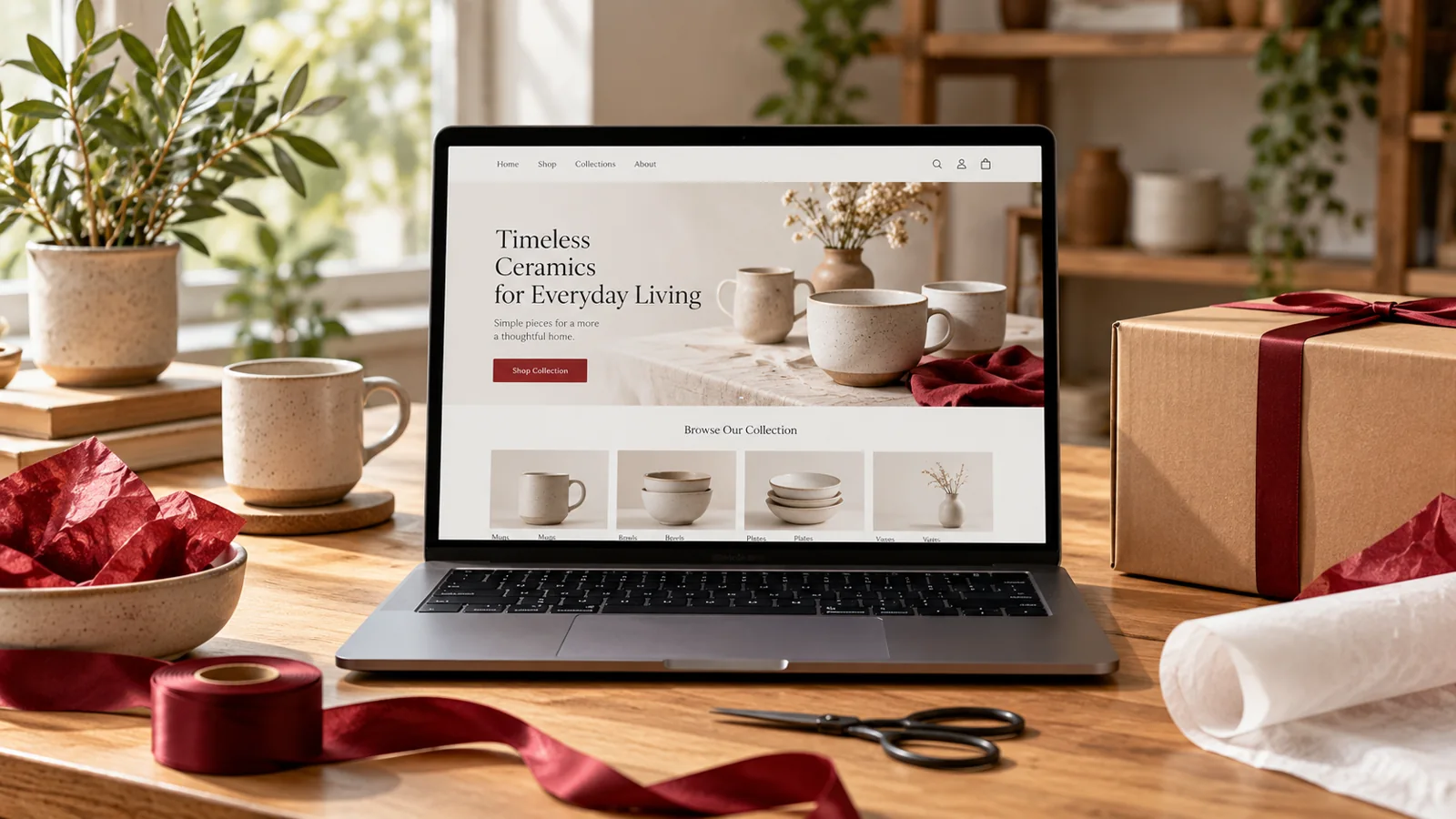
Illustrative development workspace or concept artwork; not a photograph of a client office or evidence of a completed project.
An Arabic Shopify brief needs more than a translated homepage and a mirrored screenshot. A product page may combine Arabic descriptions with Latin brand names, model numbers, sizes, prices and payment-provider interfaces. Those mixed elements are where a store that looks correct at first glance can become awkward to use.
I offer white-label Shopify development remotely from India for agency-led projects. For UAE agencies serving Arabic-speaking shoppers, I recommend approving a representative Arabic product journey before extending the theme treatment throughout the catalogue.
Confirm the theme’s supported language direction
Shopify’s multilingual store requirements advise checking right-to-left support for the chosen theme. Do not assume every existing theme or custom section will handle Arabic correctly because a translation app can insert the words. Review the actual version and any previous customisations.
If the current theme needs significant changes, compare adapting it with an appropriately supported alternative. Include the effect on custom sections, app integrations and merchant training. The agency should approve the implementation route before a fixed quote promises a complete RTL experience on an unknown codebase.
Create a representative product-language sample
Collect approved Arabic and English examples for a product title, description, size option, stock message, collection heading and cart notice. Include long text, punctuation, Latin product codes and realistic prices. A short placeholder phrase will not expose all of the layout and reading-order decisions.
Assign a reviewer who understands the language and the merchant’s terminology. The development task is to implement the approved content and behaviour, not to certify machine-generated translations. Identify which brand names remain unchanged and which labels have an agreed Arabic form. Keep those decisions in the brief so different components do not use conflicting terms.
Treat text direction as structural behaviour
The W3C’s guidance on structural markup and right-to-left text explains the role of direction in the document and its elements. Language and direction are related but different settings; translating a string does not by itself define how every surrounding component should behave.
Review navigation order, text alignment, form labels and mixed-direction fragments. Some items, such as a product photograph or a recognised brand mark, should not automatically be flipped with the layout. Use a component checklist to decide what changes direction and what remains the same, then test the result with the approved content.
Design custom sections for both content routes
For a reusable product or campaign section, define the editable fields and how each language is supplied. Avoid hard-coded promotional text hidden inside a custom asset or script. The merchant should be able to update approved content without asking a developer to locate the wording in several files.
Check spacing with the real Arabic font and copy. Buttons, tabs and cards should remain readable on a narrow mobile screen. If a section contains a diagram or decorative directional arrow, decide whether it carries meaning or simply decoration. That decision affects its language treatment and its accessible description.
Keep app and checkout review separate from theme QA
List every app that displays text or interactive controls: reviews, wishlists, search, subscriptions, delivery choices and promotional widgets. Confirm its language and RTL behaviour with the provider or a representative implementation. A theme can pass its own review while an embedded component still uses an unsuitable layout.
Record which checkout and account labels are controlled by Shopify, which come from apps and which are custom content. Keep payment-provider approval and legal wording with the merchant and appropriate advisers. The development proposal should clearly state dependencies instead of treating all third-party interfaces as editable theme components.
Review the complete mobile shopping journey
Follow the agreed journey from an Arabic collection to a product, a selected variant, the cart and the next checkout step. Check whether a language switch preserves useful context, whether long labels remain visible and whether forms are understandable. Include validation and empty states rather than reviewing only the most polished successful screen.
Test touch controls and keyboard access where appropriate, and inspect the display of mixed Arabic and Latin information. Ask the language reviewer to flag ambiguous wording separately from layout faults. The agency can then consolidate feedback into a review round with clear owners, rather than sending the developer contradictory screenshots without an explanation.
Make future merchandising part of handover
Demonstrate how the merchant adds a product, supplies its approved Arabic text and checks the result in the theme. Identify components that remain shared between languages and those with separate content. Include instructions for a product that is not yet ready in every required language.
Provide a concise list of app limitations, custom-section controls and checks to repeat after a theme update. Agree the launch support window and how later merchandising features will be quoted. A practical handover helps the agency maintain a coherent store rather than inheriting an Arabic version that only the original developer knows how to update.
Send the Arabic theme brief for a scoped proposal
Share the store URL, theme and version, desired languages, sample approved copy and the product journeys that matter most. List essential apps and any existing custom sections. Include the person who approves Arabic terminology and any client requirements that affect checkout, policies or data handling.
My white-label Shopify service can support a defined theme build or improvement with agreed review checkpoints. Your UAE agency retains the client relationship while we scope the technical implementation. Begin with one representative bilingual product journey so the quote and acceptance plan are based on the store’s real content.