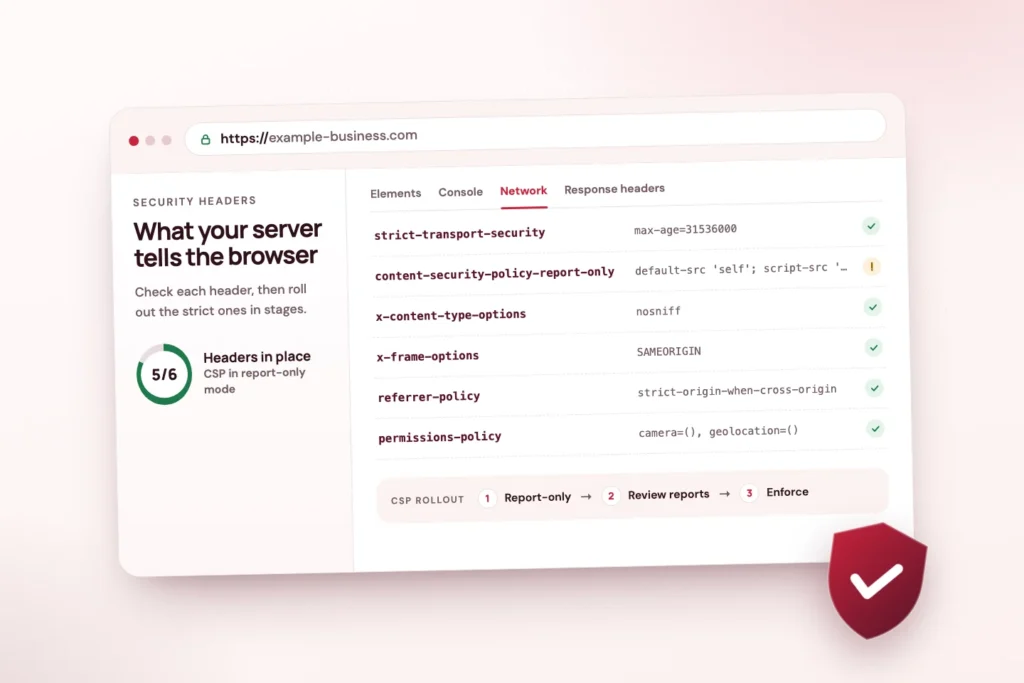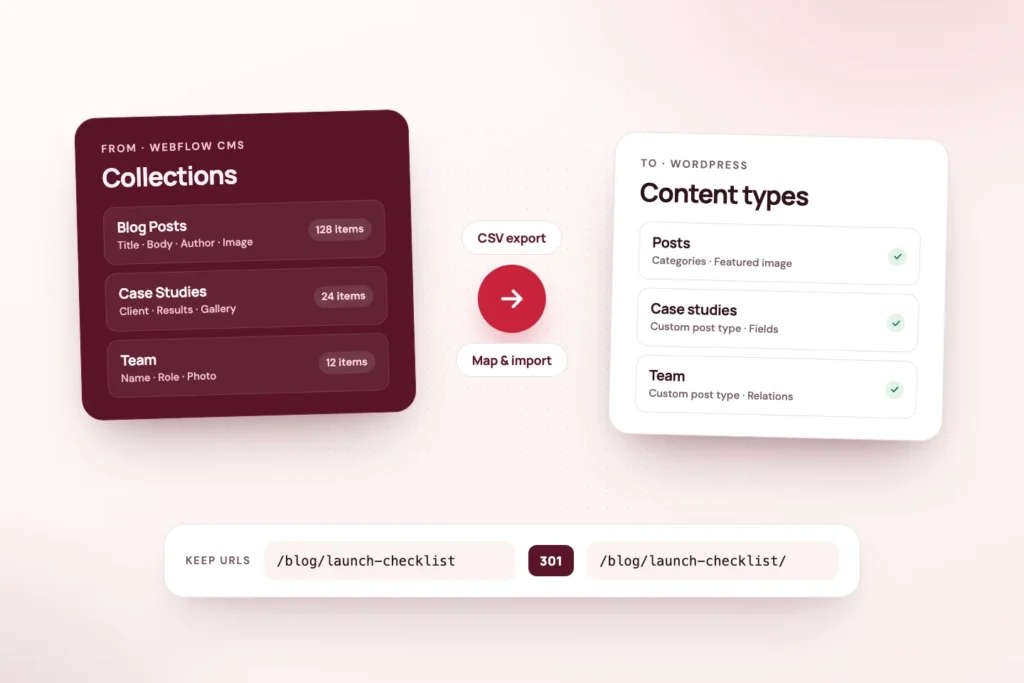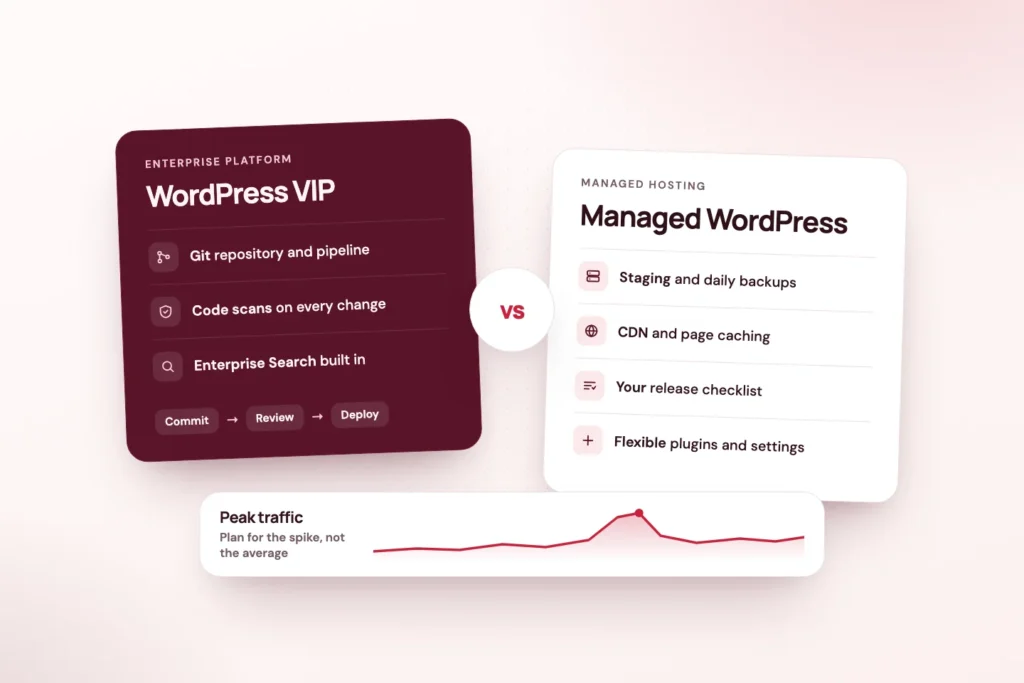
Illustrative editorial workspace; screens show concepts, not a client store, delivered project or measured result.
Your agency launches a website, then inherits plugin updates, broken forms, content requests and occasional urgent messages. If all of that lands in the same unstructured inbox, both your team and the client can struggle to know what is covered and who is handling it.
White-label WordPress maintenance can provide an agreed delivery arrangement behind your agency’s client relationship. It needs clear responsibilities, not just a promise to “keep everything updated”. My WordPress maintenance service can be scoped for agency-managed websites, beginning with a review of the actual sites and the support model you want.
Inventory the sites before promising a portfolio-wide service
Collect each website’s URL, hosting owner, active theme, important plugins, licences and business-critical functions. Note inherited problems and any custom code whose owner is unclear. A simple publishing site and a website with member access or a specialised integration should not automatically receive an identical checklist.
Start with a representative site where the agency can provide the necessary access and make decisions. Record the initial condition before routine care begins. That separates existing faults from issues first observed during maintenance, and gives both teams a sensible basis for discussing the remaining portfolio. Any authorised recovery copy or staging preparation should be agreed separately.
Make the update process understandable to the account manager
Define which update notices are reviewed, who decides when a change proceeds and how important functions are checked afterwards. WordPress documents its update process and automatic-update behaviour; the agency still needs a process suitable for its particular websites and dependencies.
Your internal report should say what changed and what was checked. A form-based lead website might require a planned check of enquiry submission, saved records and the approved notification route. A membership site needs different journeys. Do not infer that every feature is healthy simply because the homepage loads or the update screen contains fewer notices.
Separate routine care, small changes and incidents
Choose a reporting route for each type of request. Routine maintenance can follow an agreed calendar. A content change needs its own brief and approval. A possible incident needs an escalation path, with the account manager able to identify the impact and decision maker.
| Request | Information the agency supplies | Agreement needed |
|---|---|---|
| Scheduled update review | Site inventory and essential visitor journeys | Review window, approval and checks |
| New page or section | Approved content, design and required behaviour | Whether included or separately quoted |
| Enquiry form failure | Affected page, observed symptom and last known success | Investigation ownership and authorised tests |
| Possible security incident | Observed warning or activity and relevant owner contacts | Containment authority, specialist needs and communication |
This example is a routing model, not a claim that a particular support package includes unlimited development or round-the-clock response. Put the actual boundaries and any response commitments in the agreement before selling them to a client.
Keep access and approval responsibilities clear
Give each participant the access required for their work, and name the person who approves production changes. The WordPress roles model is the starting point for platform permissions. Additional plugins and hosting services can have their own access arrangements, so document those too.
The agency should also know what happens when a team member or supplier leaves. Agree how accounts, credentials and project notes are managed through approved channels. White-label delivery describes the commercial working relationship; it should not rely on shared passwords, unclear ownership or an assumption that every subcontractor can publish without approval.
Check the enquiry journey without creating unapproved messages
Form monitoring is particularly relevant for a lead-generation website, but it needs an authorised test plan. Decide when a test submission is allowed, which address receives it, how it is labelled and whether it must be excluded from conversion reporting. A test that produces multiple real-looking leads can make the marketing dashboard less useful.
Use the form-monitoring maintenance guide to define the checks in more detail. A saved submission, successful mail action and inbox receipt are different observations. An honest maintenance report should distinguish what was verified from what still depends on access, a third-party provider or the client’s confirmation.
Send a client-ready report with decisions, not just activity
A concise report can list the websites reviewed, changes made, relevant checks, unresolved items and approvals needed. Include evidence that the agency can understand without exposing confidential logs or account information. Mark any checks that were not completed and explain the operational consequence.
For example, a report can say that a plugin change was held because a required integration failed its agreed test. It should then identify who can approve the next investigation. That is more useful than labelling a site “fully secure” or “fully tested” without a defined scope. The agency remains able to communicate a precise next step to its client.
Propose the first site before committing to a large support roster
A pilot maintenance period can establish whether the inventory, ticket quality, review process and communication work for both sides. Choose the website and deliverables in advance. Agree how additional sites will be assessed and how extra investigation or development is quoted.
I can work in ClickUp and follow an agreed agency workflow. The starting discussion should cover the number and type of websites, the countries or working-hour overlap required, who handles client communication and the kind of reporting you need. Availability, service windows and commercial terms are confirmed for the engagement; they are not assumed from a general article.
Request a scoped agency maintenance proposal
Send a short site list, hosting and CMS details, the main support pain points, essential features and your preferred support process. Mention any existing errors, premium licences or access limitations. Do not send passwords in the first enquiry. We can agree the information and access needed after the initial review.
Use the WordPress maintenance enquiry for ongoing care. If the immediate need is a new build or larger change programme, use white-label WordPress development and describe that scope separately. A clear first engagement is the foundation for expanding a working relationship across more client websites.